
Cold southern latitudes, broken gear, borrowed water, and the quiet moments that make an ocean crossing unforgettable
Before you read on — a quick reminder:
This race is part of my ongoing fundraiser for the Preston Robert Tisch Brain Tumor Center, in memory of my brother-in-law Bob. If you’ve been following along and are able to make a gift to support the fundraiser, it truly means a lot. Every mile matters.
Support brain tumor research here
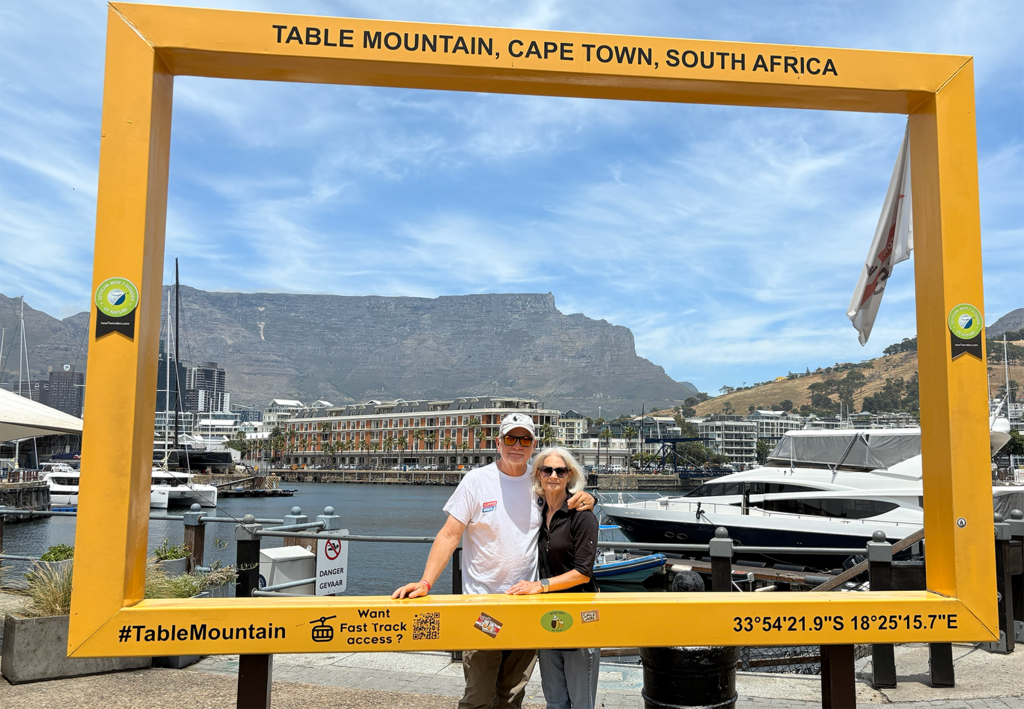
We slipped the lines in Cape Town beginning the long crossing of the Indian Ocean, but leaving South Africa carried more weight than I expected. I had just spent time with my wife and some of my family, and as the shoreline faded astern, the reality settled in — I wouldn’t see them again for another five months. That is the quiet cost of a race like this, paid before the first mile is logged. I was pretty bummed out for most of the race.
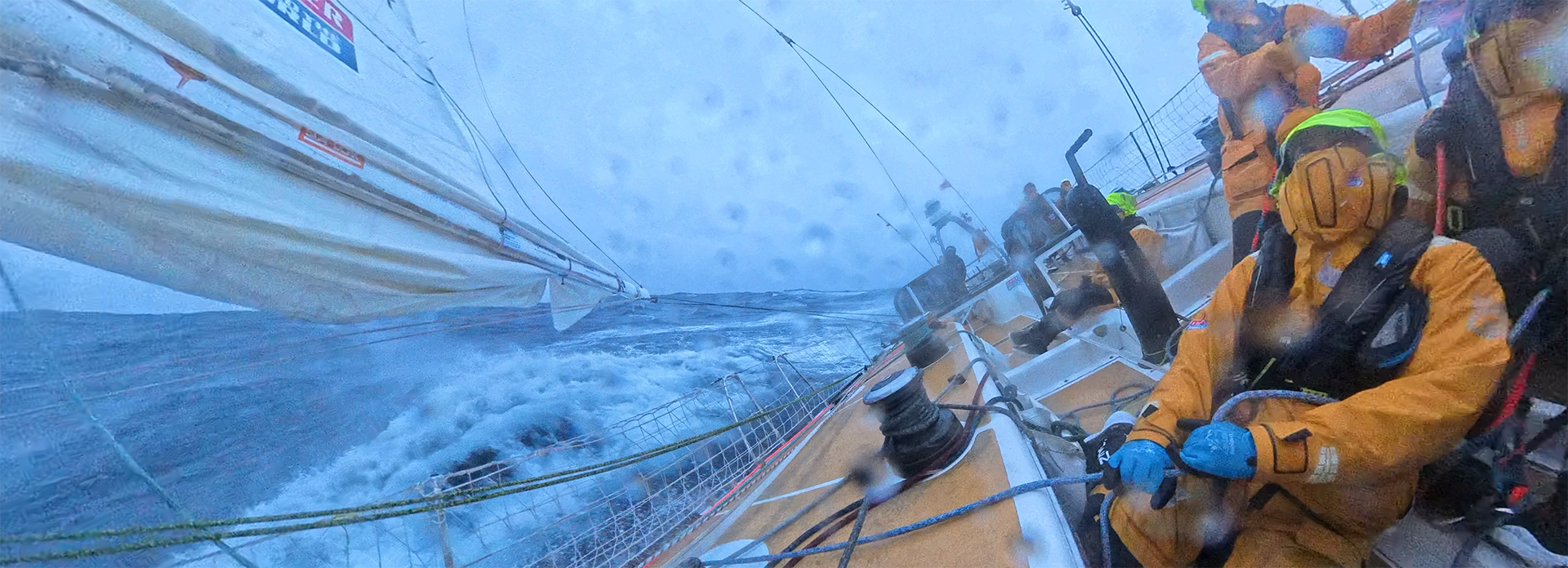
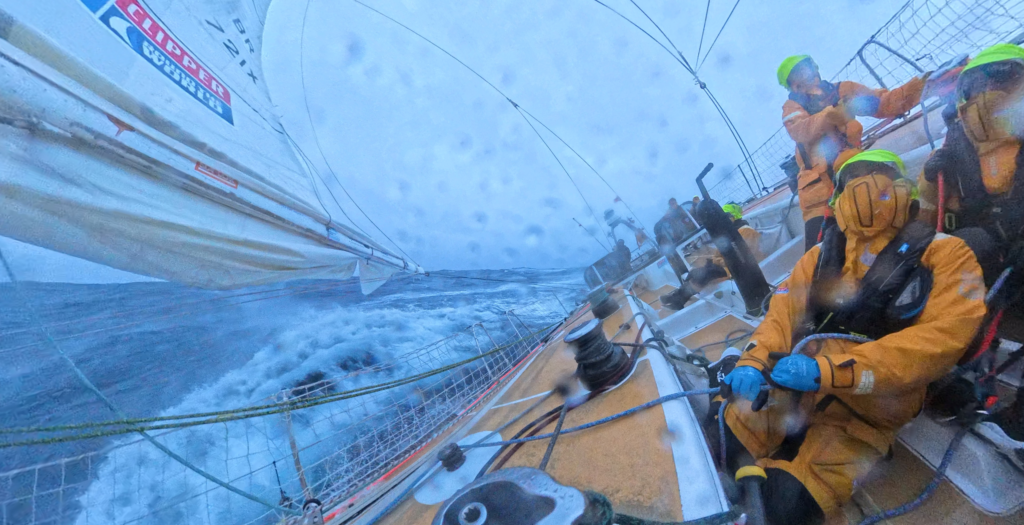
Our course east began by heading south, driving deeper into colder latitudes where the world is smaller and the weather more favorable. Eventually our course would take us below 46 degrees south latitude, where the ocean feels raw and exposed. There is no heat on a Clipper yacht, and the cold was constant. On deck, waves regularly swept across us leaving our “waterproof” foul weather gear damp. Below deck, condensation dripped from every surface ensuring everything else we wore was damp too. Nothing ever really dried. Sleeping bags stayed damp, clothing stayed cold, and the chill worked its way into everything.
But somewhere in that cold, the ocean gave me a gift.
One night I came on watch under a moonless sky and took the helm. Hanging in the shrouds ahead of me was the Southern Cross, perfectly framed and backlit by the Milky Way. It felt unreal, like steering through a planetarium that had come alive. During that watch I saw four shooting stars, including one that streaked directly across the Southern Cross itself. A handful of satellites passed overhead, and one bright, fast-moving light that I’m fairly certain was the International Space Station. Out there, far from land and artificial light, the sky doesn’t sit above you — it surrounds you.
As that long, cold night faded, the horizon slowly filled with color. A beautiful sunrise broke over the sea, and an albatross appeared, gliding effortlessly over the waves. Moments like that remind you why people have gone to sea for centuries — not just to reach a destination, but to witness things you simply cannot see anywhere else.
The ocean quickly returned to testing us.
The moisture down below found its way into our 240 volt generator cutover switch and smoke made its way out, threatening our ability to keep the batteries charged. Offshore, power is life. One of my jobs on board is to maintain the electrics, so drawing on the kind of ingenuity my father taught me years ago — the mindset of figure it out and make it work — I was able to bypass the failed switch and keep the charging system running. It wasn’t elegant, but it kept us moving.
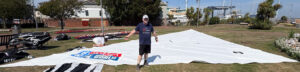
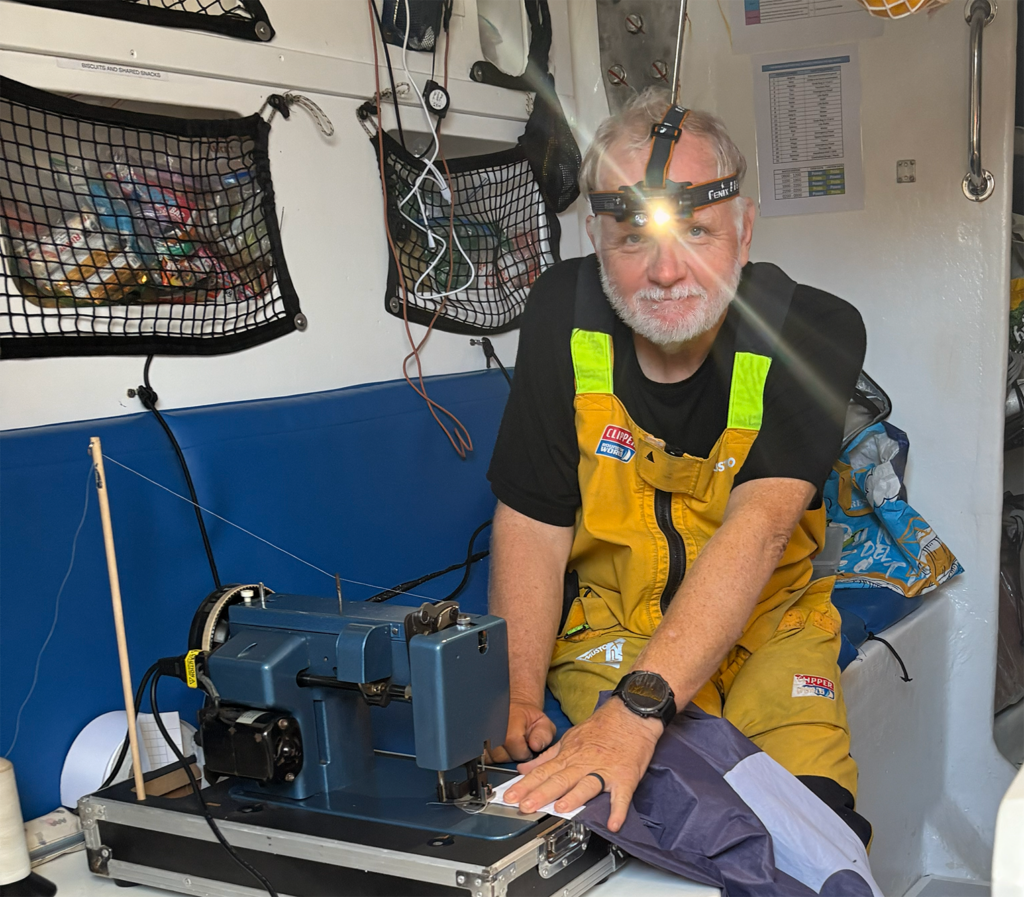
We spent much of this leg downwind in big winds, sailing under white sails instead of spinnakers. The constant flogging of those yankee sails against the hanks was brutal, tearing holes into the sailcloth. “Sailmaker” is another of my jobs onboard, so on multiple occasions, I spent more than a full day of watches hunched over sails, needle in hand, sewing patches while the boat pitched and rolled. It was a team effort and was slow, exhausting work — but without it, we wouldn’t have been racing at all.
At the same time, my helming has grown stronger and more confident, especially downwind. One moment in particular stands out. I was at the helm while my crewmates worked through an issue on the foredeck. As the skipper headed forward to help, she looked at me and said:
“Don’t flog the staysail. If you do, someone could get hurt.”
No pressure.
I held course, acutely aware that my decisions affected not just the boat, but the safety of the people working ahead of me. That kind of responsibility sharpens you quickly.
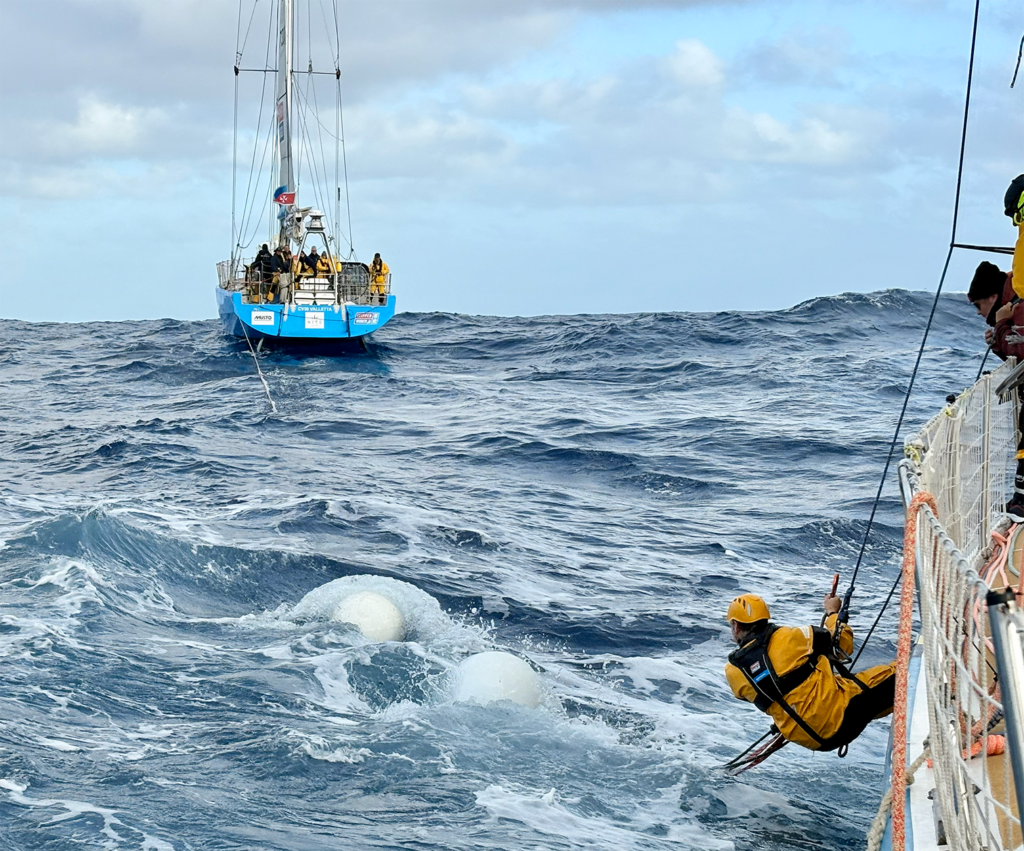
Then came another test — our water maker failed. Suddenly, we were on water rations for nearly a week. Clipper’s shared-fleet spares system proved its value when the UNICEF boat came to our rescue with a portable water maker. We executed a boat-to-boat transfer as we had trained for, mostly calm and deliberate despite the conditions.
As the transfer wrapped up, I heard a voice carry across the waves:
“Hey Tim!”
It was Lucas, a young sailor from Spain. We met during my very first Clipper training and we talk when we’re in port, but on the water we’re competitors — he sails on UNICEF. More than a year later, and half a world away, hearing a familiar voice in the middle of the Indian Ocean was a powerful reminder of the connections this race creates.
Point Zulu
Partway across the Indian Ocean, we passed a point I had been quietly waiting for — a spot on the ocean I call Point Zulu.
It marked the place where we sailed near the antipode of my home in Florida, the spot on the planet farthest from where my life on land normally unfolds. Standing on deck at that moment, I was as far from home as I could possibly be, yet still deeply connected to it. Sailing east across the Indian Ocean, halfway around the world, that invisible line between two opposite points felt strangely meaningful. Every mile from that point forward takes me toward home.
Point Zulu wasn’t marked by a buoy or a ceremony. The sea looked the same as it had the day before. But for me, it was a reminder of why I’m out here — to test myself, to tell the story, and to turn miles into something that can do good through this journey and the fundraising that goes with it.
Eighth Place and the Fremantle stopover
As a result of the water maker failure and the time lost managing it, we arrived in Fremantle in eighth place. Since tying up, our days have been filled with mending sails, repairing damage from the crossing, and methodically getting the boat ready to sail south again and around Tasmania then north to Airlie Beach. There’s a familiar rhythm to life in port after a hard leg — fix what broke, prepare for what’s next, rest, and quietly steel yourself for the miles still ahead. We also welcome new people on board and say goodbye to those leaving. Sarah and Sid in particular are two wonderful people that I will miss greatly. We have been together since Portsmouth, UK and the boat will be different without those two fine sailors.
While the work on the boat keeps our hands busy, the mind has a way of drifting when things finally slow down. It was in that quieter space, between repairs and preparation, that I received sad news from home.
I learned that my mother had passed away.
She was a strong influence in my life — encouraging me to pursue an education and become the engineer I am today. She had a quiet strength, was fiercely independent, and lived life on her own terms. She was proud of this journey and fully supportive of my decision to sail around the world. I feel incredibly fortunate that I was able to FaceTime with her just a few days ago and at the same time sad that I wasn’t there to give her one last hug.
This leg was cold, wet, exhausting, and at times overwhelming. It was also filled with loss, growth, responsibility, friendship, and moments of quiet beauty. I carry all of it with me as we continue east.
So we prepare to head south again and around Tasmania, toward even higher southern latitudes, I know the Southern Cross will once again ride low in the rigging, a familiar companion reminding me of that moonless night early in the leg when the sky seemed to wrap itself around the boat. I will carry with me those who are no longer in my life. Onward.
Cape Town → Fremantle | Leg Summary
- Distance: ~5,250 nautical miles
- Time at Sea: 22 days
- Finish: 8th place
- Conditions: Cold southern latitudes, sustained downwind sailing, heavy sail wear
- Notable Challenges: Water maker failure, generator electrical issue, sail damage requiring extensive repairs
Race Start → Current | Race Summary
- Distance: ~16,100 nautical miles
- Time at Sea: 75 days