
Another 5,300 nautical miles behind us
This leg of the Clipper Round the World Race was a struggle—physically, mentally, and emotionally. But as I think about that word struggle, I’m reminded that mine is temporary and chosen. The patients and families at the Preston Robert Tisch Brain Tumor Center face a kind of endurance no one signs up for. Their winds aren’t predictable, their seas don’t calm, and yet they keep fighting. I’m sailing this race in memory of my brother-in-law Bob, and to honor everyone navigating their own storm. If you’d like to support that cause, please visit https://tintypetim.com/sailing-for-a-cause.
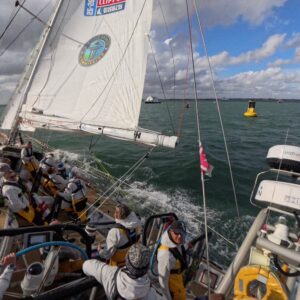
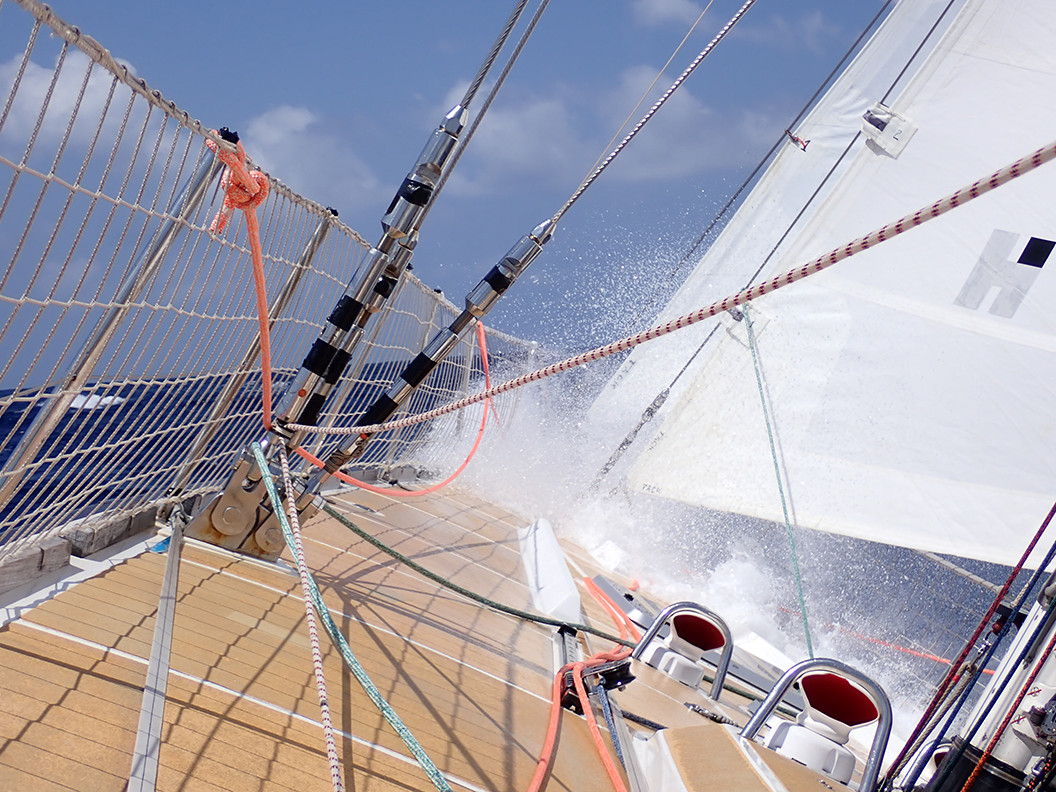
We left Puerto Sherry, Spain with fair weather and quickly settled into our 24-hour watch rhythm—six hours on, six hours off during the day and three four-hour rotations each night. This cycle of sleeping, working, and eating makes every day seem like three, and they all blur together. By the second real day, the breeze built and we hoisted one of our spinnakers, a huge, balloon-shaped sail made for catching light downwind air. It’s big, dramatic, and powerful—but also temperamental. Under “white sails” (our mainsail and headsails), the boat feels steady and direct. Under the spinnaker, she dances—beautifully, but always on the edge of chaos.
About a week in, the wind strengthened, and we packed the kites away to return to white sails. Just two days later, the seas settled and we flew our biggest Code 1 spinnaker—a light, wide sail made of a parachute type material and designed for gentle winds and maximum speed. It’s exhilarating when it works and terrifying when it collapses.
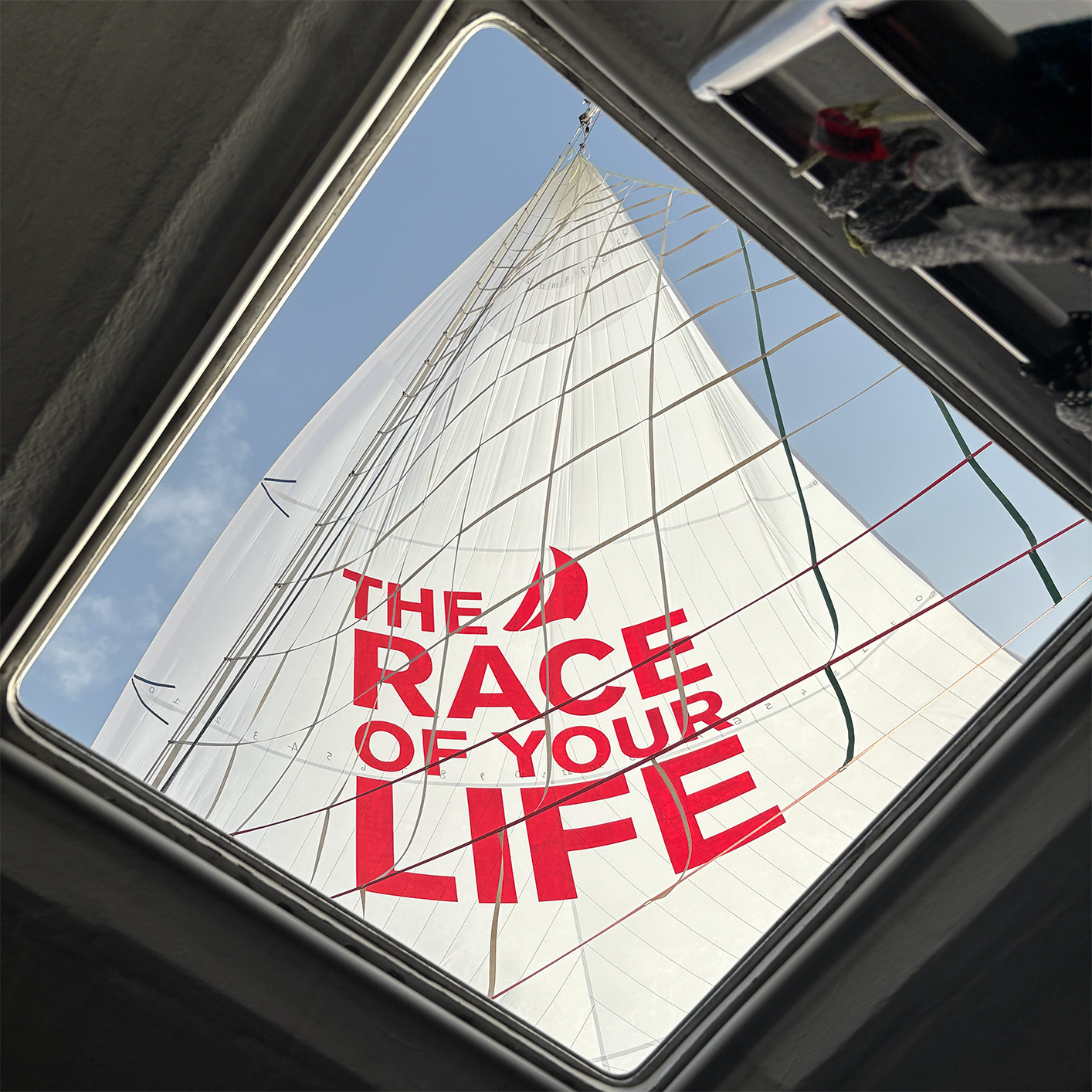
Helming (steering) under white sails is where I’m most comfortable—steady hands on the wheel, compass in my sightline, the boat balanced and true. Helming under a kite, though? That’s a different beast. Every gust demands split-second reactions; every wave feels like a test. Some love the adrenaline—I prefer the precision of a clean compass course.
On September 25, we entered the Doldrums Corridor, an area near the equator officially called the Intertropical Convergence Zone (ITCZ). It’s where the northern and southern trade winds meet—and sometimes cancel each other out completely. For centuries, sailors feared the wind holes in these calm, humid waters where ships could drift for days. Today, the Clipper Race allows limited motoring to cross the zone, but we were lucky; we found enough breeze to sail and save precious fuel.
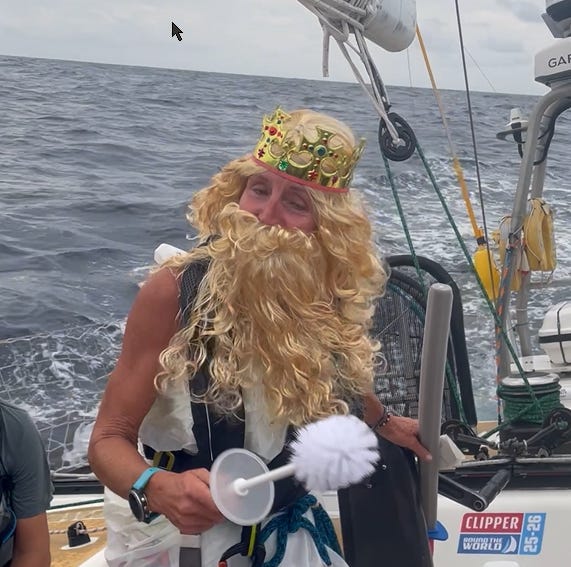
Just as we left the ITCZ, a tactical misstep earned us a six-hour penalty that hung over our head for the rest of the race. Then, on September 30, we crossed the Equator—and I finally transitioned from pollywog to shellback. It’s an old maritime tradition: when a sailor crosses the equator for the first time, King Neptune himself comes aboard to conduct the ceremony. Decades ago, when I served in the Navy, my ship was scheduled to cross but was recalled before it happened. It took nearly forty years, but I finally earned the title.
By early October, the winds returned with force. We packed away the kites, but a few days later, our heavier Code 3 spinnaker went up again—proof that conditions change fast on the open ocean. Near the end, we crossed the finish line off Punta del Este, Uruguay, only to find that rough weather made the harbor too dangerous to enter without engine power. So, we turned back to sea and rode out yet another storm for a day.
Our engine trouble wasn’t new. About 1,500 miles earlier, a discarded bulk carrier bag had wrapped around our propeller. That meant no engine—and a constant drag. Even a slowdown of one-tenth of a knot adds up over 1,500 miles: roughly 150 nautical miles lost. Out here, that’s the difference between finishing mid-fleet or near the back.
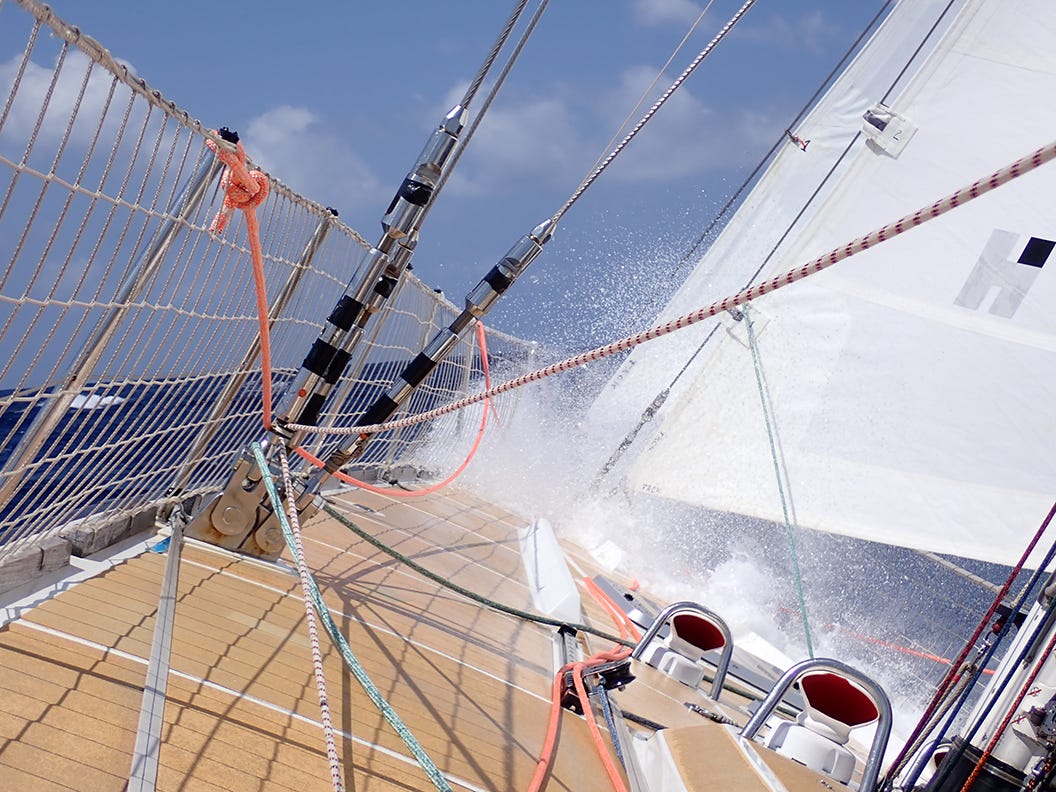
But we made it.
And Uruguay has welcomed us with warmth, color, and hospitality that reminds me why this journey matters.
Next up: we turn west and cross the South Atlantic Ocean to South Africa.
Until then—thank you for following along, and please consider donating to the fundraiser for the Preston Robert Tisch Brain Tumor Center at https://tintypetim.com/sailing-for-a-cause Every mile I sail honors those who can’t choose their fight.