
Relentless is the word that keeps coming back to me when I think about Leg 4,
Relentless helming. Relentless wind. Relentless pressure on the boat and the crew.
Before you read on — a quick reminder:
This race is part of my ongoing fundraiser for the Preston Robert Tisch Brain Tumor Center, in memory of my brother-in-law Bob. If you’ve been following along and are able to make a gift to support the fundraiser, it truly means a lot. Every mile matters.
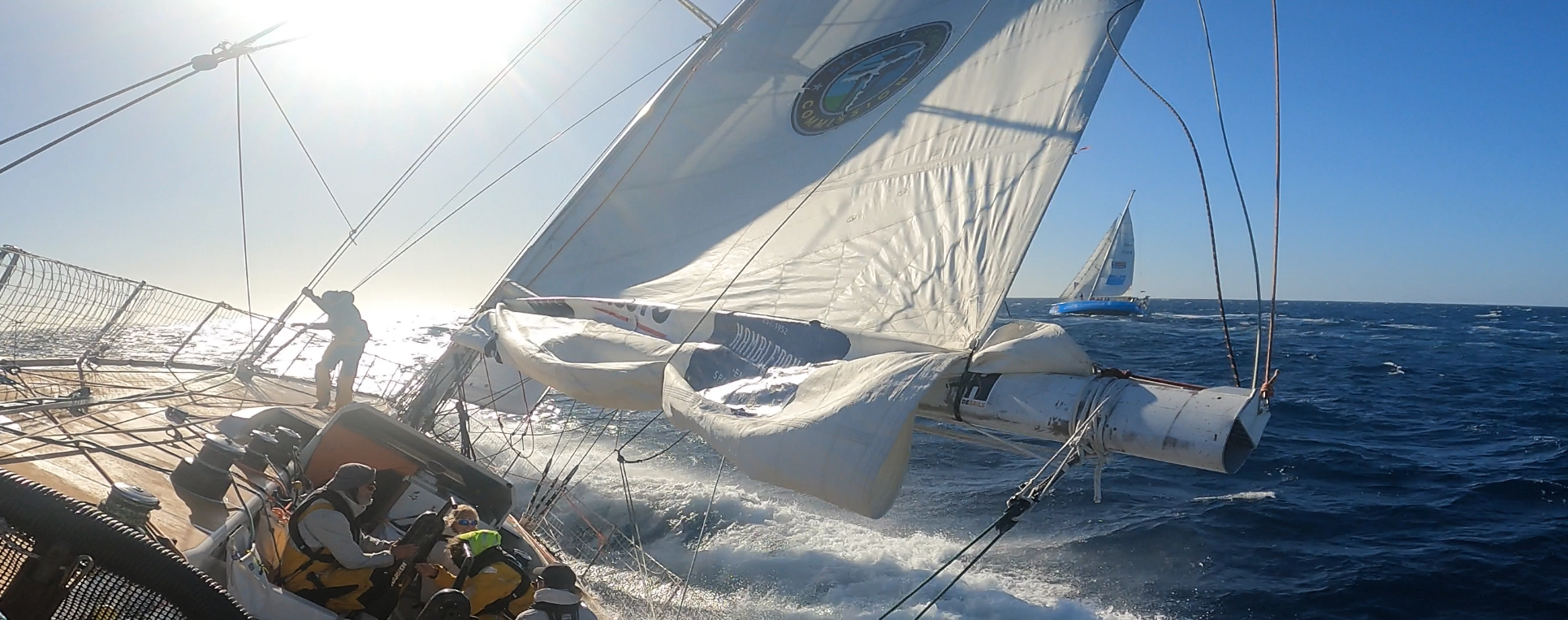
We started this leg with a smaller crew than any leg so far, which meant there was no easing into anything. From the moment the race began, we were beating upwind—hard. Several days of it at the start, and then more days of the same after rounding Tasmania. Beating upwind is physical sailing: aggressive helming and constant focus. There are no long breaks, no easy angles. Just wind on the nose and miles to go.
I took the helm right after our mis-timed race start that put us across the starting line last. That is never ideal, but something clicked. We pressed hard to windward with the sails well trimmed and boat after boat slowly slipped behind us. I had the thrill of helming through part of it. When a boat is heeled over, the helm is on the high windward side so the mainsail blocks much of the view of the boats on the leeward side. I couldn’t actually see the boats we were passing—until their wakes started appearing from behind the mainsail, then their stern, then were at our side, then behind. One by one. Five boats in that two hour stretch. We went from last to a windward position. That feeling was thrilling.
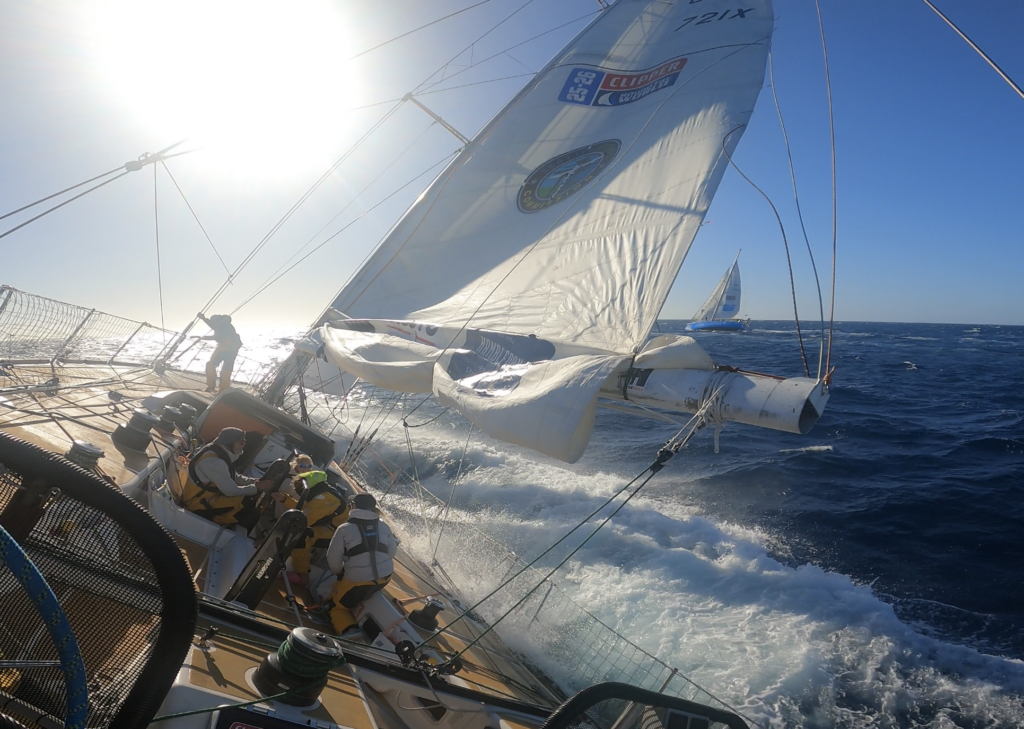
Our early surge didn’t last. A tactical error and just plain bad luck in the form of wind holes slowly erased our gains, and despite all the grinding miles and hard sailing, we slipped back toward the rear of the fleet and spent the rest of the race chasing ground we never quite recovered.
Life below decks during that stretch was its own kind of endurance. With the boat heeled over around 45 degrees for days at a time, nothing was level. You slept wedged into your bunk, bracing so you didn’t slide downhill. Every step was a climb. Gear migrated relentlessly toward the low side no matter how carefully it was stowed, and even resting took effort. The boat never stopped reminding you which way was down.
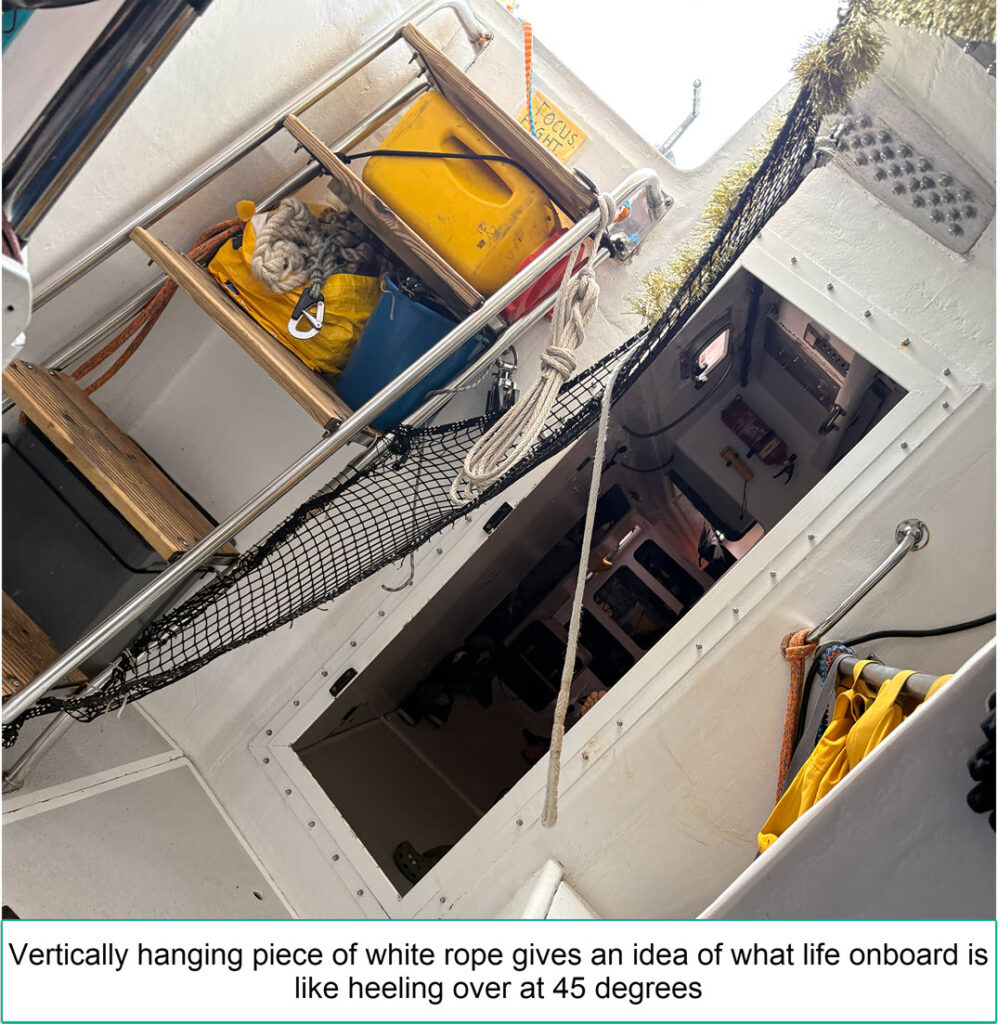
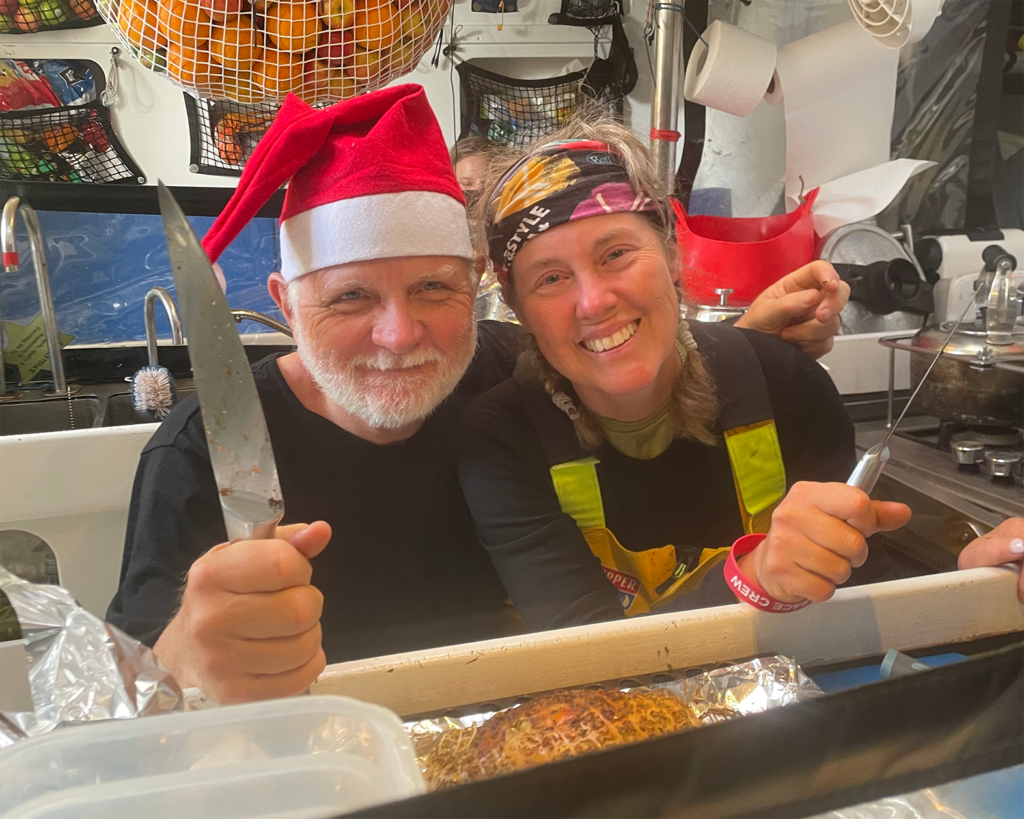
During that time, I had galley duty—what we call hero watch—and doing it while the boat was heeled over was probably the single hardest day of my entire Clipper Race so far.
Hero watch is the quiet, relentless work of keeping the crew fed and the boat alive while the sea fights you at every turn—pots clanging and sliding with every wave, the stove swinging restlessly on its gimbals at an impossible angle—cooking and serving shoulder to shoulder with your bunk buddy from the opposite watch (your “bunk buddy” is the person that sleeps in the same bunk as you when you’re not on watch, and vice versa).
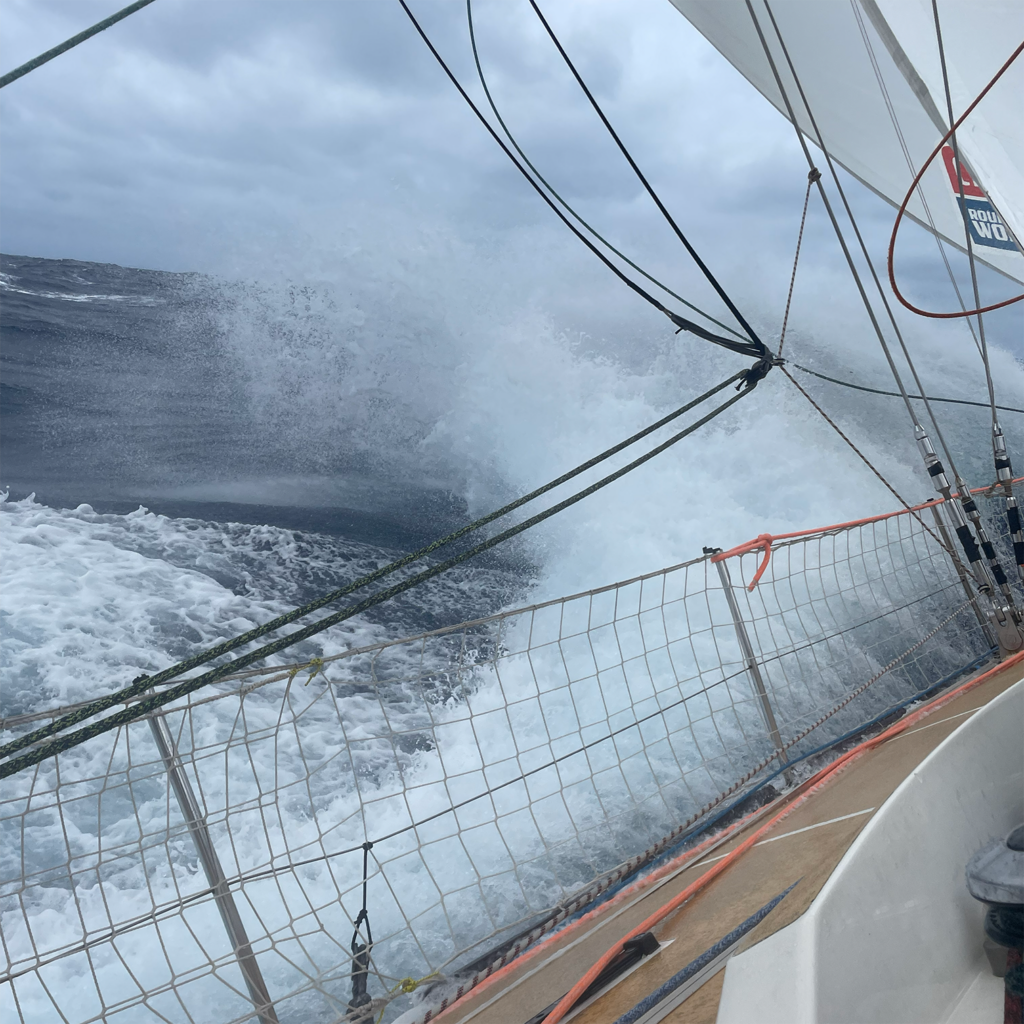
On Christmas Eve and into Christmas Day I lived out a decades old dream. When I was a kid I dreamed of racing in big races and big seas. I got to do that. I was on the helm, the boat heeled over about 45 degrees, with the rail buried in the water on the low side. We were driving hard upwind. Christmas Eve and Christmas Day, beating into the Southern Ocean. Cold. Loud. Wet. Perfect.
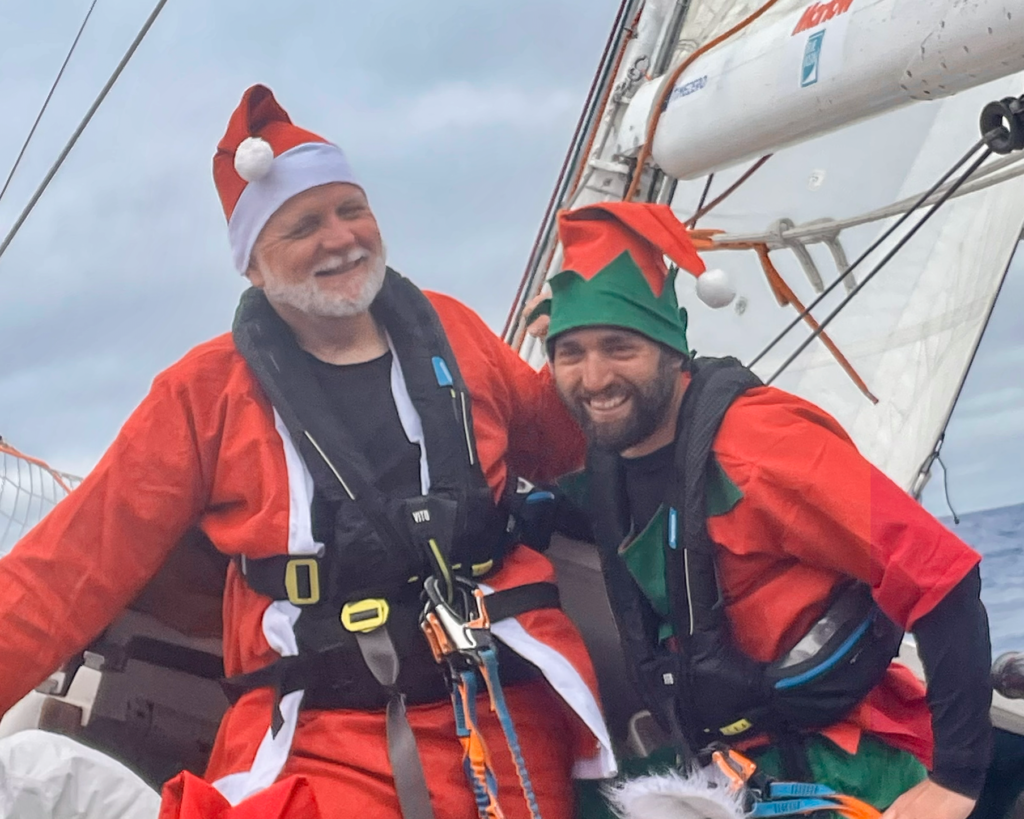
We celebrated Christmas the only way sailors can. I was asked to be Santa so I grew out my white beard. Everyone on board got a stocking with a can of Coke, some candy, and a lemon—simple things, but out there they felt extravagant. We also had a Secret Santa gift exchange and I was gifted a pair of merino glove liners, and in the cold conditions they were priceless.
Later came two solid days of rain. When you’re on the helm in that kind of weather, the rain doesn’t just fall—it stings. It drives through your hat and zings into your eyes. You blink constantly, squint into the wind, and steer anyway.
Somewhere south of Tasmania we reached the southernmost point of my entire journey—the place where the fleet finally turned north. I marked that moment as Point Sierra. After days of forcing the boat down into wind and sea, it felt like a quiet pivot: the end of pushing south, and the beginning of the long climb back toward warmer latitudes and distant ports still ahead. The work didn’t stop—but the direction finally changed.
We said goodbye to the albatross that had glided effortlessly around us for months, masters of that harsh environment. Dolphins joined us for a while—brief flashes of joy alongside a leg that demanded everything.
As if Leg 4 hadn’t already asked enough, tropical cyclone Koji began approaching the finish. My home is in Florida in the USA, so I am no stranger to tropical storms and hurricanes but this one was coming at me half a world from home. The race was ultimately shortened and we were given a hard deadline: be inside the marina by 1:00 PM the next day or divert to a protected bay and ride out the storm for another 30 hours.
We pushed.
Relentlessly.
We crossed into the marina at 12:55 PM.
Five minutes to spare.
Leg 4 didn’t give us much.
But it gave us everything we earned.
Fremantle → Airlie Beach | Leg 4 Summary
- Distance: ~4,105 nautical miles
- Time at Sea: 21 days
- Finish: 7th place
- Conditions: Prolonged upwind sailing with sustained heavy heel in cold, wet Southern Ocean conditions
- Notable Challenges: Short-handed sailing, relentless helming, hero-watch galley duty at extreme angles, tactical setbacks, and a cyclone-shortened finish beaten by five minutes.
Race Start → Current | Race Summary
- Distance: ~20,200 nautical miles
- Time at Sea: 96 days