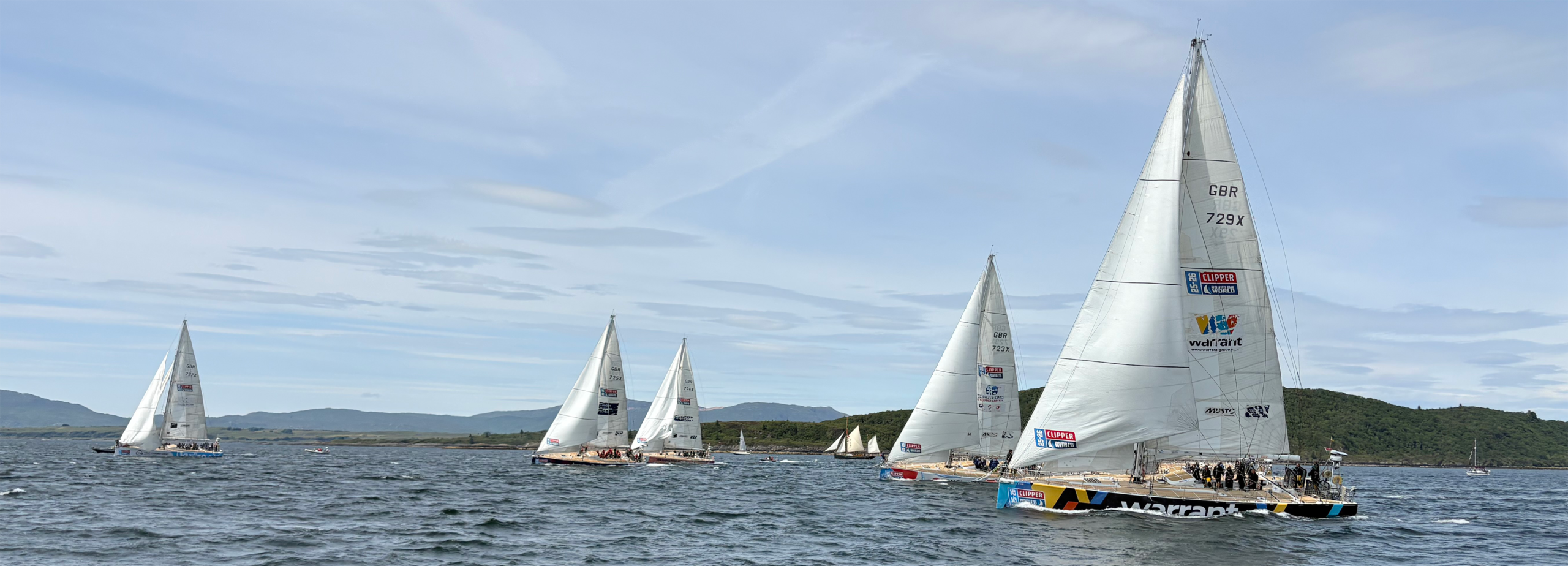

After 45,000 miles, six ocean crossings, and eleven months at sea, one last wind hole stood between me and home.
I’ve been home for just over two weeks now. I know—I left everyone hanging. After nearly eleven months of living by a watch schedule, sleeping in a bunk on a moving boat, and measuring time in four-hour increments, coming home has been an adjustment. There’s something wonderfully strange about climbing into a bed at night knowing nobody is going to wake me up and tell me it’s time to put on foul weather gear and go stand watch.
But before I get too comfortable, there’s one last leg of this journey to tell you about. And it began in Washington, DC.
Back to the Atlantic
We left Washington under engine, motoring down the Potomac River in the early morning, into the Chesapeake Bay, and eventually back out into the Atlantic Ocean. It was familiar territory for me in more ways than one.
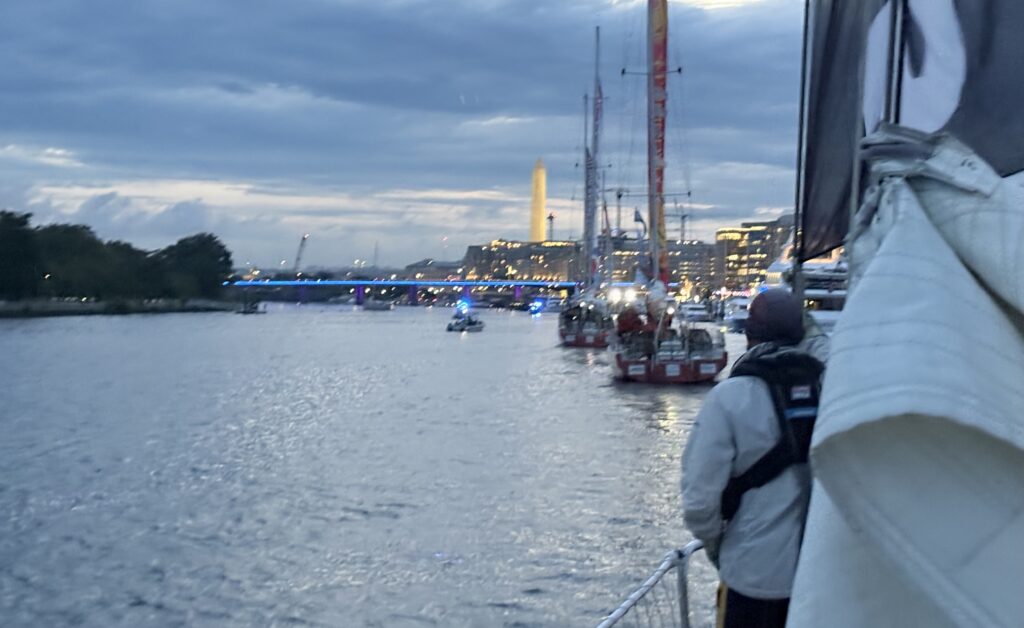
As we made our way toward the Chesapeake, we passed five tall ships heading the opposite direction toward Baltimore. Seeing those traditional sailing ships passing our very modern racing yacht was one of those moments that makes you appreciate just how much sailing has changed—and how much of it really hasn’t.
Then we turned east and back into the Atlantic.
This would be my third Atlantic crossing aboard a Clipper yacht and my fifth Atlantic crossing overall. Two of those crossings happened many years ago while I was in the Navy and the North Atlantic hadn’t changed much. It is grey, cold, and misty.
There is a personality to the North Atlantic that is difficult to describe until you have spent time there. Other oceans have been brilliant blue, brutally hot, endlessly rolling, or spectacularly wild. The North Atlantic can feel almost monochromatic. Grey sky meets grey water somewhere in the mist, while cold damp air seems to work its way into everything. It was exactly how I remembered it from my Navy days.
After sailing around the world, there was something fitting about finishing my ocean crossings in waters that felt so familiar.
One Sail Finally Gives Up
We started Leg 8 in an unusual position. After sailing tens of thousands of miles around the world, we were one of the few boats that still had our original sail inventory intact. That streak finally ended on the Atlantic. For the first time during the race, we blew out a spinnaker. Our Code 2 kite tore, which meant that much of my port time after arriving in Oban, Scotland, was spent doing something that had become very familiar during this race: sewing sails.
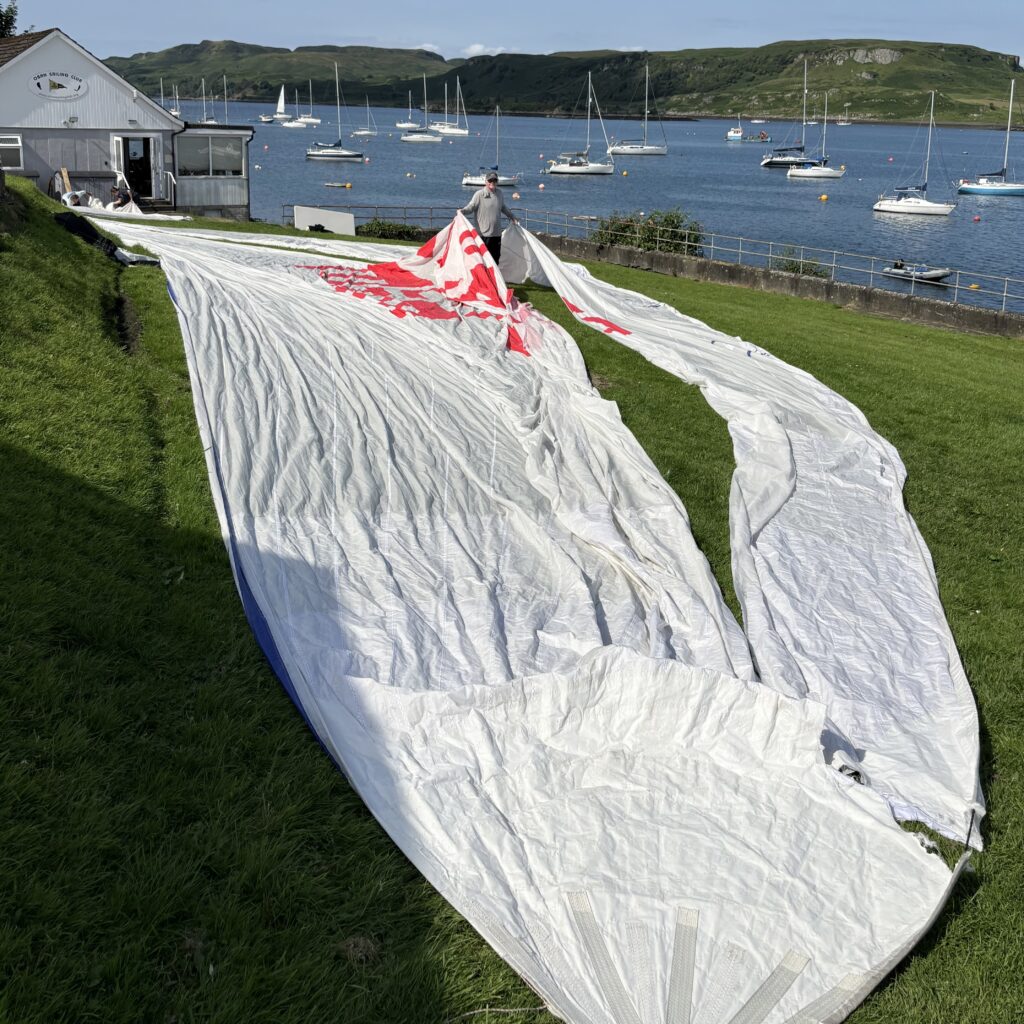
And I certainly didn’t do it alone. Valerie and Joanne put in a tremendous amount of time helping me get the Code 2 back together, with Alice, Ian, and Con also pitching in. A huge thank you to all of them. Sail repair isn’t glamorous work—especially when everyone would rather be enjoying a port stop—but their help meant we could get the kite repaired and ready to race again. Repairing it ourselves mattered. We wanted the Code 2 ready in case we needed it for the final race, and sending a sail away to a loft for professional repairs could also cost the team penalty points.
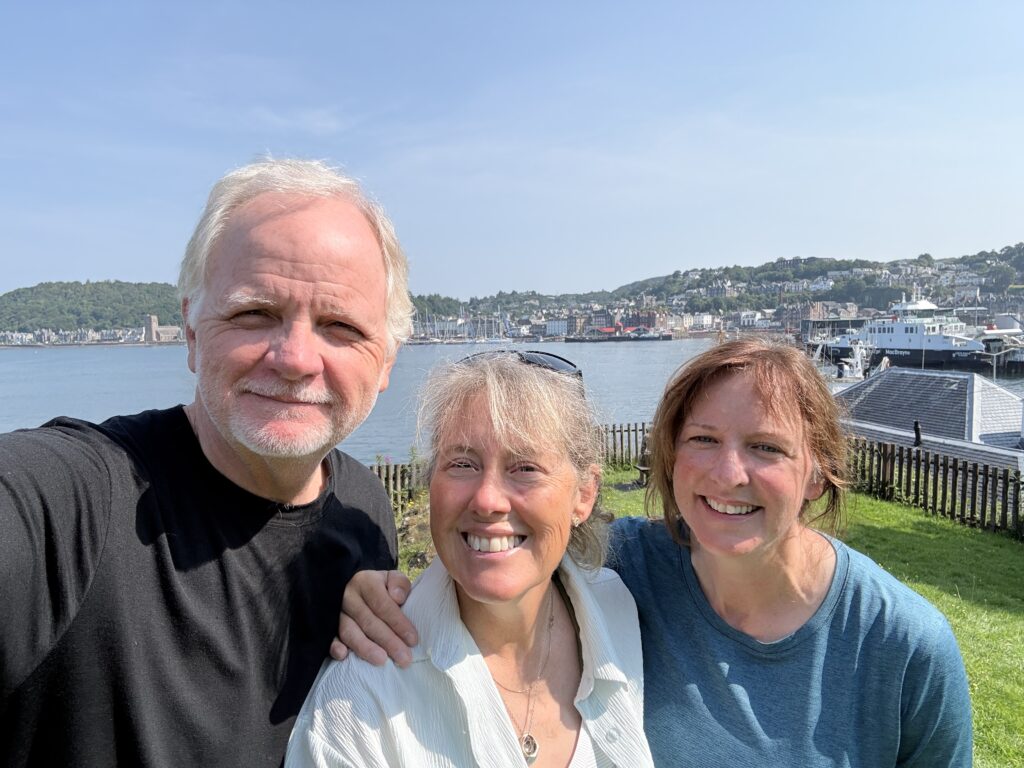
So while there was Scotland to explore, there was also a very large spinnaker waiting for a needle and thread. Fortunately, I still managed to see enough of Scotland to know one thing for certain: I want to go back. Oban was beautiful, the people were wonderful, and it is absolutely somewhere I hope to visit again very soon—preferably next time without a damaged spinnaker waiting for me.
One Last Race
From Oban, there was only one race left, Oban to Portsmouth. We started well, but almost immediately found ourselves struggling to escape Scotland as the wind disappeared. Eventually we got moving again and headed south, only to find ourselves trapped in another wind hole in the English Channel.
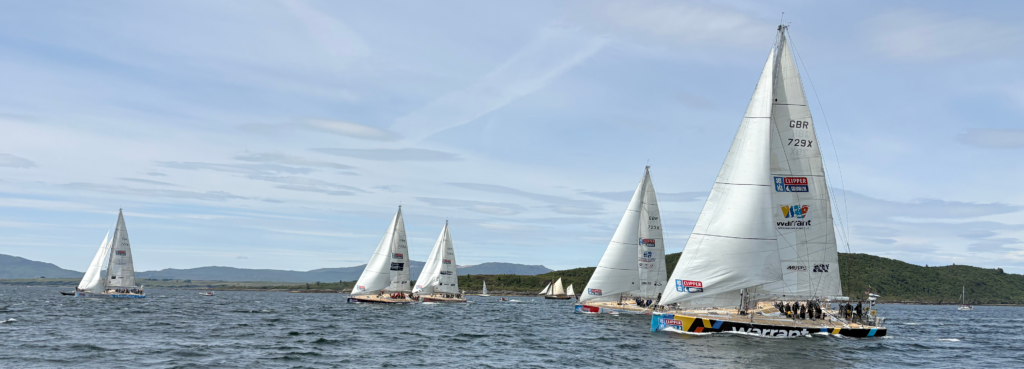
The contrast with the beginning of the race couldn’t have been greater. Nearly eleven months earlier, when we sailed out of Portsmouth at the start of this adventure, we crossed the English Channel and headed toward the Bay of Biscay in gale-force conditions. I remember those first days vividly—the boat heeled hard over, waves crashing across the deck, and a brand-new crew quickly discovering what ocean racing was really going to be like.
Now, after sailing around the world, we were back in the same English Channel trying desperately to get to Portsmouth—and there was barely enough wind to move the boat. At the beginning, the Channel seemed determined to beat us up. At the end, it simply wouldn’t let us go home. Portsmouth was right there. The finish of a 45,000-mile race was right there. And we couldn’t get to it.
There are few things more frustrating on a racing yacht than having a destination almost within reach and not having enough wind to move toward it. After everything the previous eleven months had thrown at us—the Southern Ocean, huge seas, tropical heat, freezing cold, storms, equipment failures, and thousands upon thousands of miles—the final challenge wasn’t a gale. It was patience. Eventually, though, the race was called and we powered up the iron sail (the engine) for the final stretch to Portsmouth.
Coming Home
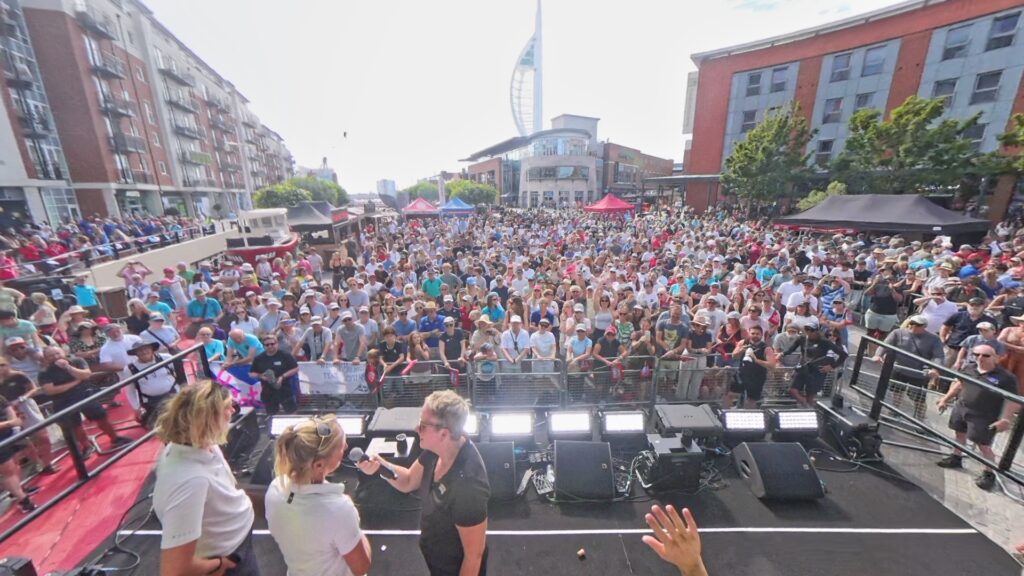
Nothing really prepared me for the arrival. As we approached Portsmouth, the scale of the welcome became apparent. A Brittany ferry escorted us in. The historic steamship Shieldhall joined the procession. Two tugboats fired enormous water cannons into the air. And there were boats everywhere.
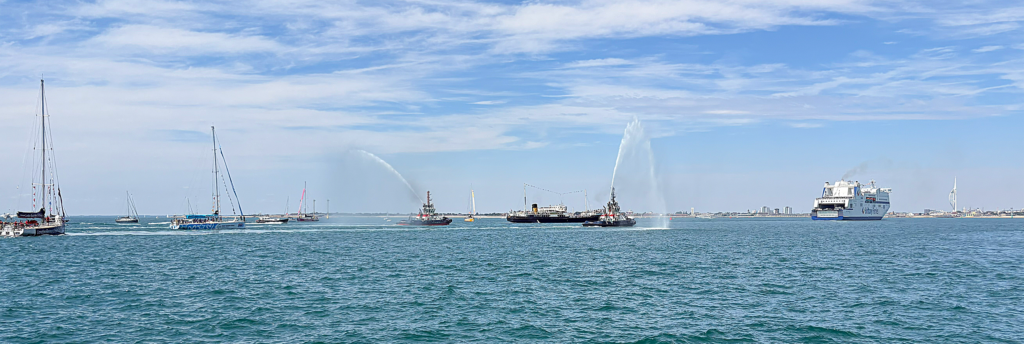
My wife had found her own special way to experience the finish. She booked a spot aboard one of the Clipper 68 yachts that went out to watch the fleet arrive, giving her a small taste of Clipper sailing herself. Even better, she ended up sailing on one of the very boats I had trained on before the race began. There was something wonderfully circular about that. More than two years earlier, I had stepped aboard those training boats knowing almost nothing about what lay ahead. Now my wife was aboard one of them watching me return after sailing around the world.
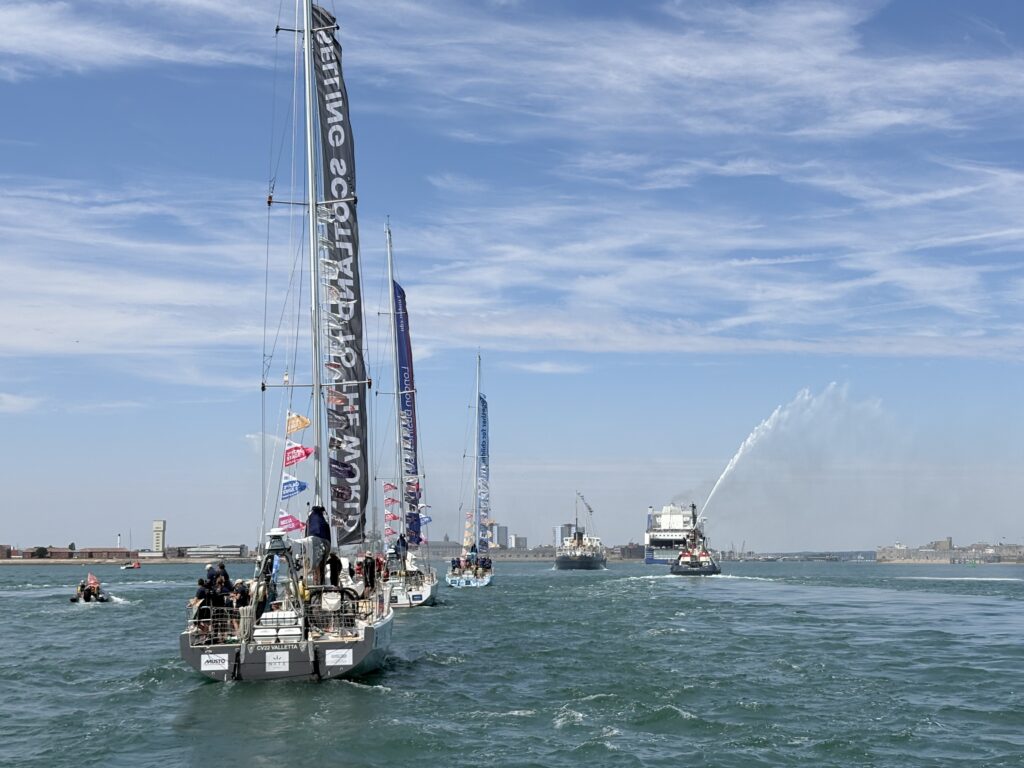
And then we entered Portsmouth. The same place where this adventure had started nearly eleven months earlier. After months when the horizon often contained absolutely nothing but ocean, suddenly we were surrounded by people. People waving. People cheering. People who had followed this race and were waiting for us to come home.
Fourth Around the World
When everything was finally counted, Power of Seattle Sports finished fourth overall. Fourth place. Eight legs. Thirteen individual races. Approximately 45,000 nautical miles of racing. Around the world.
There were certainly moments during the race when we wished we had sailed faster, made a different tactical decision, avoided a penalty, caught a different weather system, or found just a little more wind. But fourth place in a race around the planet? I’ll take it. Because the number on the results sheet can only tell a tiny part of this story. It can’t measure the nights spent helming beneath the Southern Cross. It can’t measure the cold of the Southern Ocean or the heat of the tropics. It can’t measure friendships formed while soaked, exhausted, hungry, frustrated, or laughing uncontrollably in the middle of nowhere.
It can’t measure crossing the equator, rounding the bottom of Australia, sailing through Asian fishing fleets, winning across the North Pacific, tying my own knot near Central America, passing my home in Florida offshore, returning through the Chesapeake, or crossing the Atlantic one final time. And it certainly can’t measure what it feels like to sail back into the same harbor where you started after going all the way around the world.
And Now I’m Home
For nearly eleven months, there was always another port. Another race. Another weather system. Another watch. Another sail change. Another ocean.
Now there isn’t. I’m home in Florida.
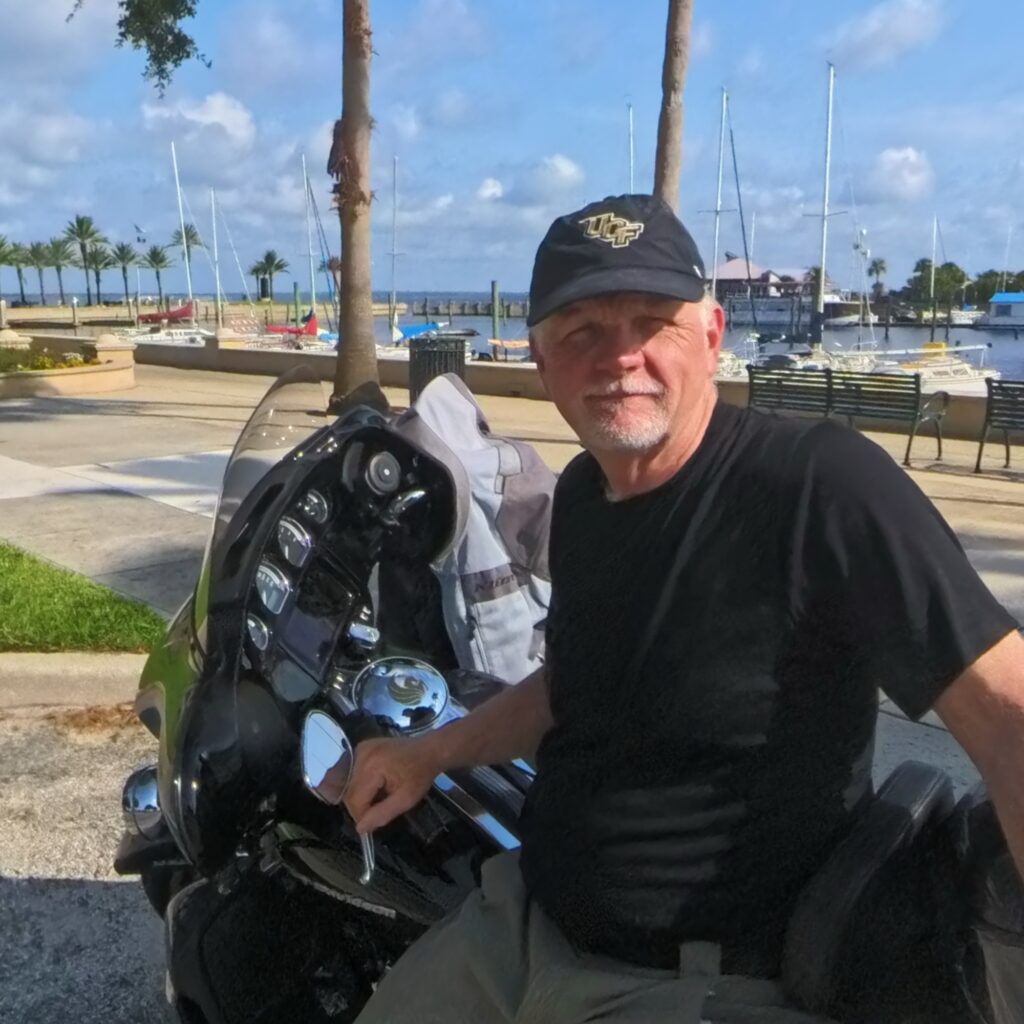
My bags are being unpacked. My foul weather gear is finally drying for the last time. I can sleep through the night. I can turn on a faucet without wondering how much water is in the tanks. And when I wake up, the floor isn’t moving underneath me. I’m still figuring out what normal feels like again.
When I left Portsmouth, I knew I was setting out to sail around the world. What I couldn’t know was what those 45,000 miles would contain, or how different the person sailing back into Portsmouth would be from the one who sailed out. There will be plenty of time to reflect on that. For now, though, there is one wonderfully simple thing left to say:
I sailed around the world.
And I’m home.