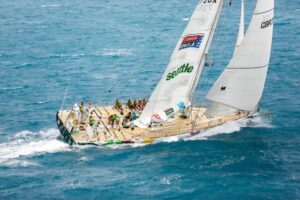

From the Panama Canal to Chesapeake Bay, familiar waters marked the beginning of the final journey home.
Before I begin this update, a quick thank you to everyone who has followed this journey and supported my fundraiser for the Preston Robert Tisch Brain Tumor Center at Duke University. I set out on this circumnavigation in honor of my brother-in-law, Bob Spychalsky, who lost his battle with brain cancer in 2012. As the voyage enters its final weeks, there is still time to contribute if you would like to support the cause. Every donation helps advance research and treatment for patients and families facing brain tumors.
For nearly eleven months, the horizon always led farther away. Each ocean crossing stretched the distance between me and home as we circled the globe—across the Atlantic, through the Southern Ocean, over the Pacific, and back to the Americas from the west. Then, somewhere between the Panama Canal and the entrance to the Chesapeake Bay, the feeling shifted. The world that had seemed to keep unfolding ahead of us suddenly began narrowing toward familiar waters. For the first time since leaving Portsmouth, every mile felt like it was carrying me home instead of away from it. We had made the final turn toward home.
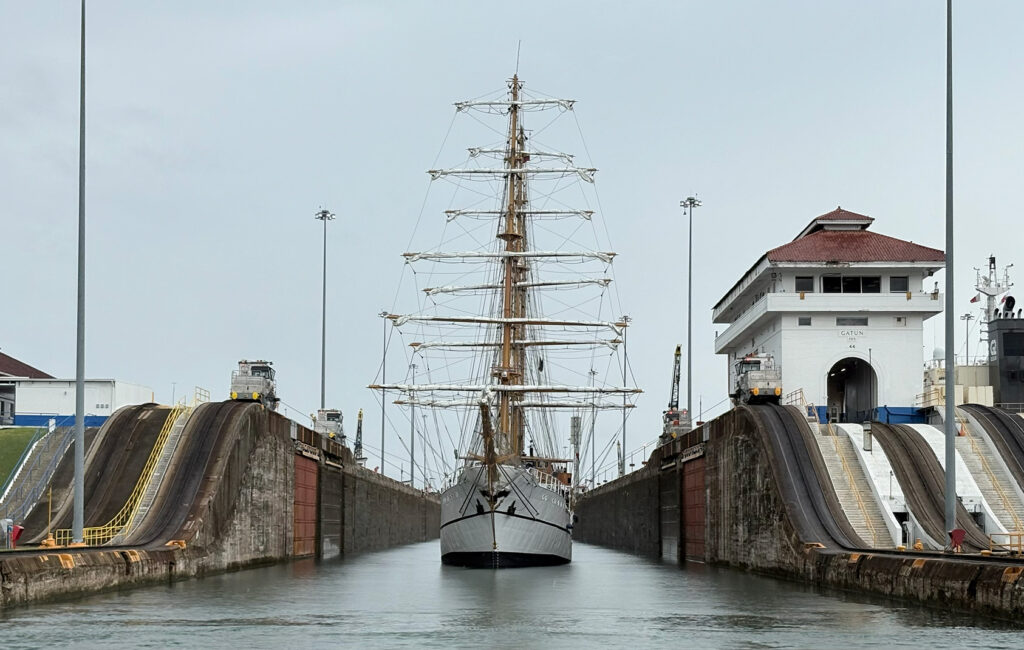
As we motored into the Panama Canal, I realized this would be my fifth transit. The previous four had all been aboard the battleship USS Iowa during my Navy days. Battleship Iowa, with its 108-foot beam, filled the 110-foot width of the locks. This time, moving through the canal aboard a 70-foot racing yacht as part of a circumnavigation felt very different.
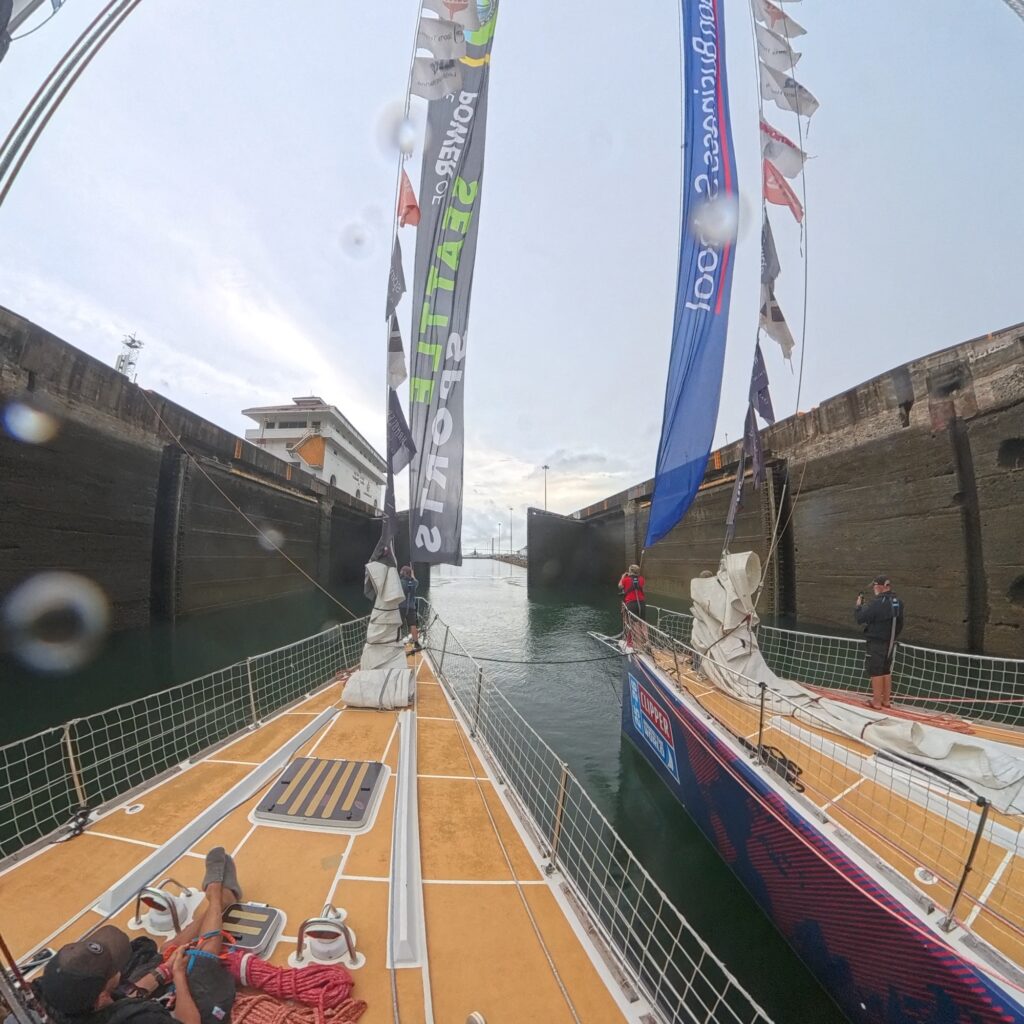
To my surprise, I found myself paying far more attention to the details than I ever had before. The engineering marvel of the locks, the choreography of vessels moving through them, and the history surrounding the canal all seemed more significant when viewed from the deck of a sailboat. One unexpected highlight was sharing the locks with a beautiful three-masted training ship from the Ecuadorian Navy. Watching her towering masts rise above the lock walls made for a memorable transit and a reminder that traditional seamanship still has a place in a world dominated by giant container ships.
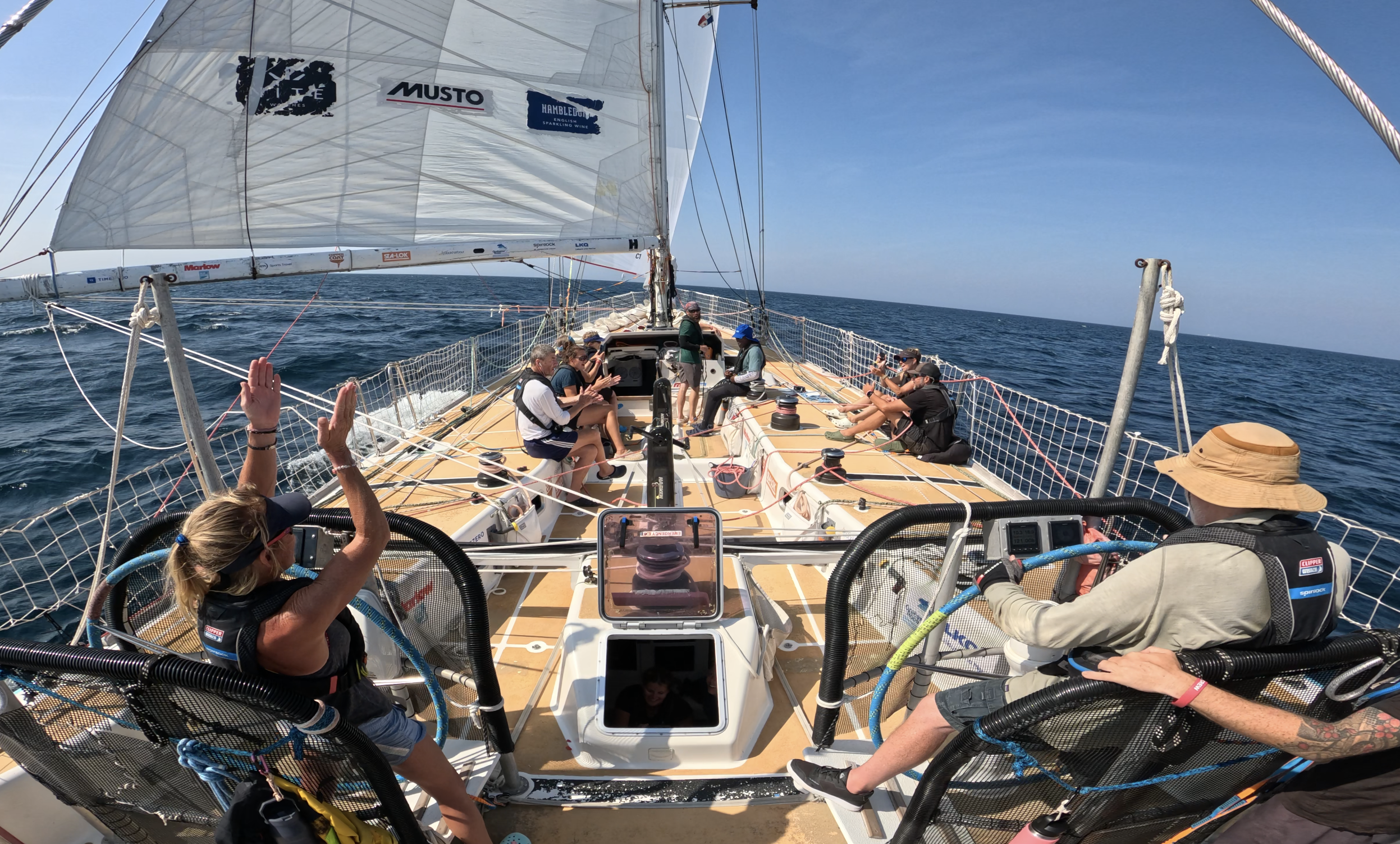
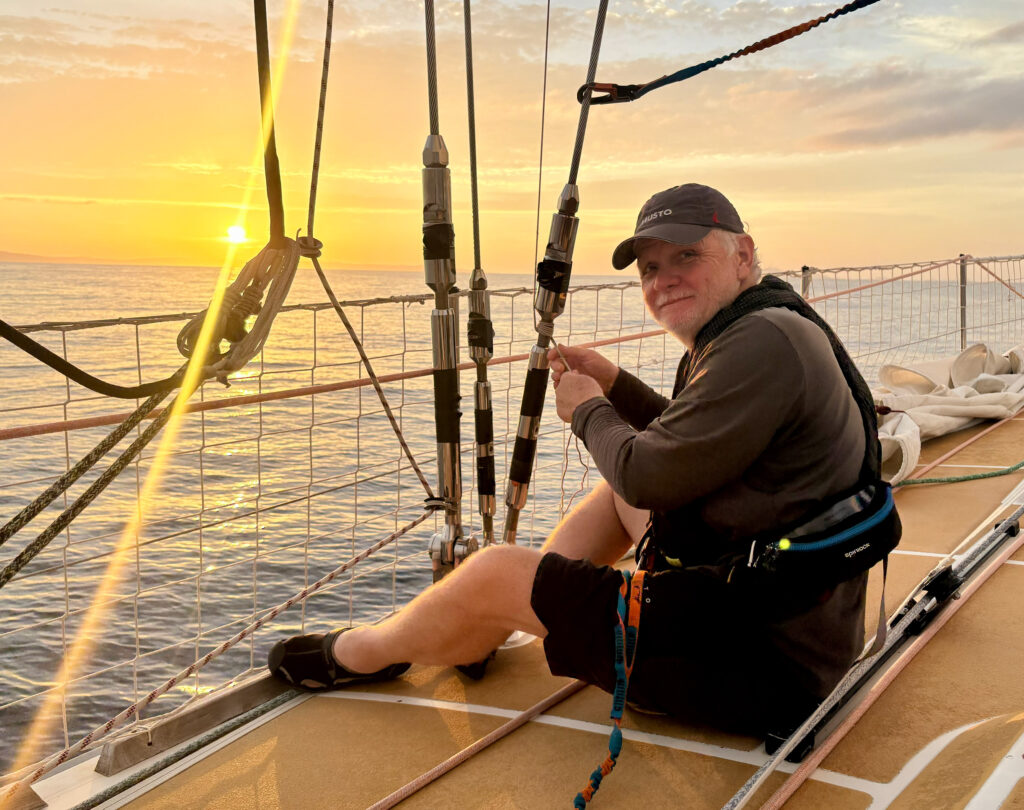
Once clear of the canal, our course turned north through the Caribbean. The sailing was largely downwind, which sounds idyllic until you add tropical heat, relentless sun, and patches of almost no wind at all. Leg 7 from Seattle to Washington, D.C. delivered exactly what I expected: inescapable heat, brutal sunshine, and enough wind holes to test everyone’s patience. Progress often came in fits and starts as we searched for breeze while the fleet compressed and expanded around us.
One of the most meaningful moments of the leg came as we passed offshore from Florida. In global terms, we were only a short distance from home. Standing on deck and looking west toward the state where I grew up, where my family lives, and where I will soon return, carried a weight I had not expected. After nearly eleven months of measuring life in watches, weather systems, and ocean crossings, home was no longer an abstract destination on a chart. It was over that horizon. Familiar roads, familiar voices, and the people I had been thinking about for almost a year suddenly felt close enough to reach.
I named that waypoint Point Henry.
Throughout this voyage I have marked a few personal milestones. Midway through the race, deep in the Indian Ocean, we passed through Point Zulu—the exact antipode of my home in Central Florida. At that moment I was literally as far from home as it is possible to be on the surface of the Earth. Point Henry was the opposite. Not quite home, but close enough to feel its pull. After sailing around the world, crossing every ocean, and visiting ports on multiple continents, we were finally passing the waters that led back to my own life. It felt less like another waypoint and more like a threshold.
As we continued north, another familiar landmark appeared: the entrance to the Chesapeake Bay. Approaching Chesapeake Light was a surprisingly emotional experience. During my Navy career I had passed that area many times while entering or leaving Norfolk. My ship was homeported there, and I was born only a few miles away. Seeing those waters again from the deck of a sailboat felt like two very different chapters of my life briefly overlapping. The young sailor who once departed these waters and the person returning after a circumnavigation seemed, for a moment, to share the same horizon. The bay was not simply another geographic feature on our route—it felt like a welcome home from a place that had been part of my story long before this voyage began.
The race itself delivered one final twist. I was at the helm as we crossed the finish line in second place. After thousands of miles of racing, it felt like a strong result and a fitting conclusion to the leg. Unfortunately, a two-hour penalty assessed after the finish dropped us back to sixth place in the final standings. Such are the margins in offshore racing. Sometimes the result on paper does not fully reflect the effort of the crew or the race that was sailed.
Even so, Leg 7 was memorable for all the reasons I expected. Between Seattle and Washington, D.C., we transited the Panama Canal, crossed the Caribbean, threaded through wind holes, endured tropical heat, and sailed along some of the most historically significant waters of my own life.
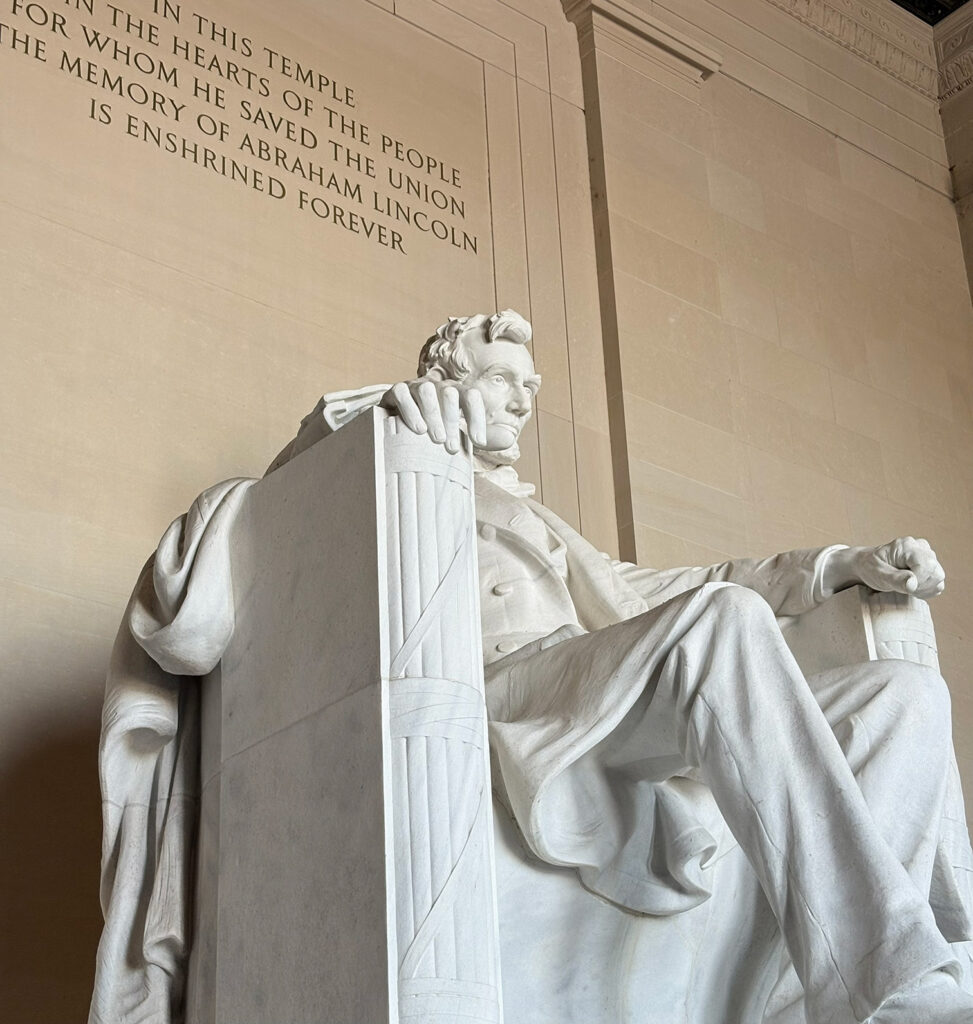
Now the finish line is in sight—not just for this leg, but for the entire circumnavigation.
From Washington, D.C., we begin our final ocean crossing, heading east across the Atlantic toward Scotland. After that comes the final run south to Portsmouth, England, where this adventure began nearly a year ago.
In just 34 days, if all goes according to plan, I will sail back into the harbor where we first cast off the dock lines and started this journey around the world. I have imagined that moment countless times: the familiar shoreline coming into view, the realization that there are no more oceans left to cross, and the quiet understanding that a chapter that has defined nearly a year of my life is finally coming to a close. Just a few days after that, I will be home—not as the person who left, but as someone shaped by every mile, every storm, every watch, and every horizon in between.
The final turn has been made. One last ocean remains between here and home. For the first time since this voyage began, home no longer feels distant. It feels real, waiting just beyond the next stretch of water.