
Leg 5. Race 1. The leg that tested more than sails and standings
Three weeks that felt like three months.
And for the first time in more than 20,000 nautical miles, I’m not sure what comes next.
A Quiet Beginning
This leg began quietly.
We motored south from Airlie Beach to Mackay to clear Australian immigration. Flat water. Diesel humming. Paperwork. It felt procedural — like closing a door gently before stepping into something harder.
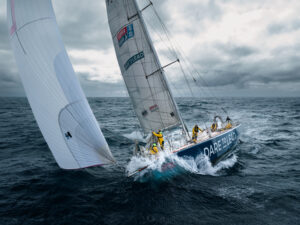
Then came the Le Mans–style start. The countdown hit zero and off we went. Sails went up and almost immediately we were hard on the wind.
For days.
Beating upwind with the boat heeled so far over that walking meant climbing. Every movement required bracing. Sleep came sideways. The horizon was permanently crooked.
It didn’t ease.
The Fall
Early in the leg, while crossing the galley during one of those steep, pounding upwind stretches, the boat lurched and I didn’t catch myself. I slammed across the galley and into the bulkhead — tailbone first, leg twisting, and my lower back taking the rest of it.
The kind of hit that makes you go quiet for a moment.
I was down for a watch and for the rest of the race I operated somewhere between stiffness and sharp pain. Sitting hurt. Climbing hurt. Bracing as I moved around hurt. Even lying in my bunk hurt if the boat motion was wrong.
There’s no medical timeout at sea. I adjusted and kept going.
The Furnace
It was at least 95°F (35°C) above deck most days.
Below deck was no better — sometimes worse. The Clipper 70s are powerful boats, but this is their sixth lap around the world and they are tired. Little things like dorade vents and galley fans no longer ventilate the way they once did. Stove burners are temperamental. Systems show their age. Things fatigue. Things break.
Nothing catastrophic on this leg, the water maker hummed along. Just constant reminders that these boats, like the crew, are a little worn.
For nearly three weeks we lived inside a damp furnace. Sweat never dried. I’d wake already wet and put on foul weather gear knowing I was about to get soaked again — by rain or by my own body.
There is a smell that comes from sea water mixed with sweat, trapped heat, and tired gear. It is awful and I carried it constantly.
At one point the skipper pulled me aside and gently told me my black t-shirt reeked. I think she assumed I had been wearing the same shirt the whole time. The truth is, I have five identical black shirts. They all reeked.
In that heat, there was no winning.
As Advertised
Here’s the truth.
The Clipper Race is almost exactly what they said it would be.
It is hard work every minute the boat is at sea and for days of cleaning and maintenance when in port. There is no Sunday morning. There is no sleeping in. There is only the rhythm of watch rotations. Four or six hours on. Four or six hours off. Repeat.
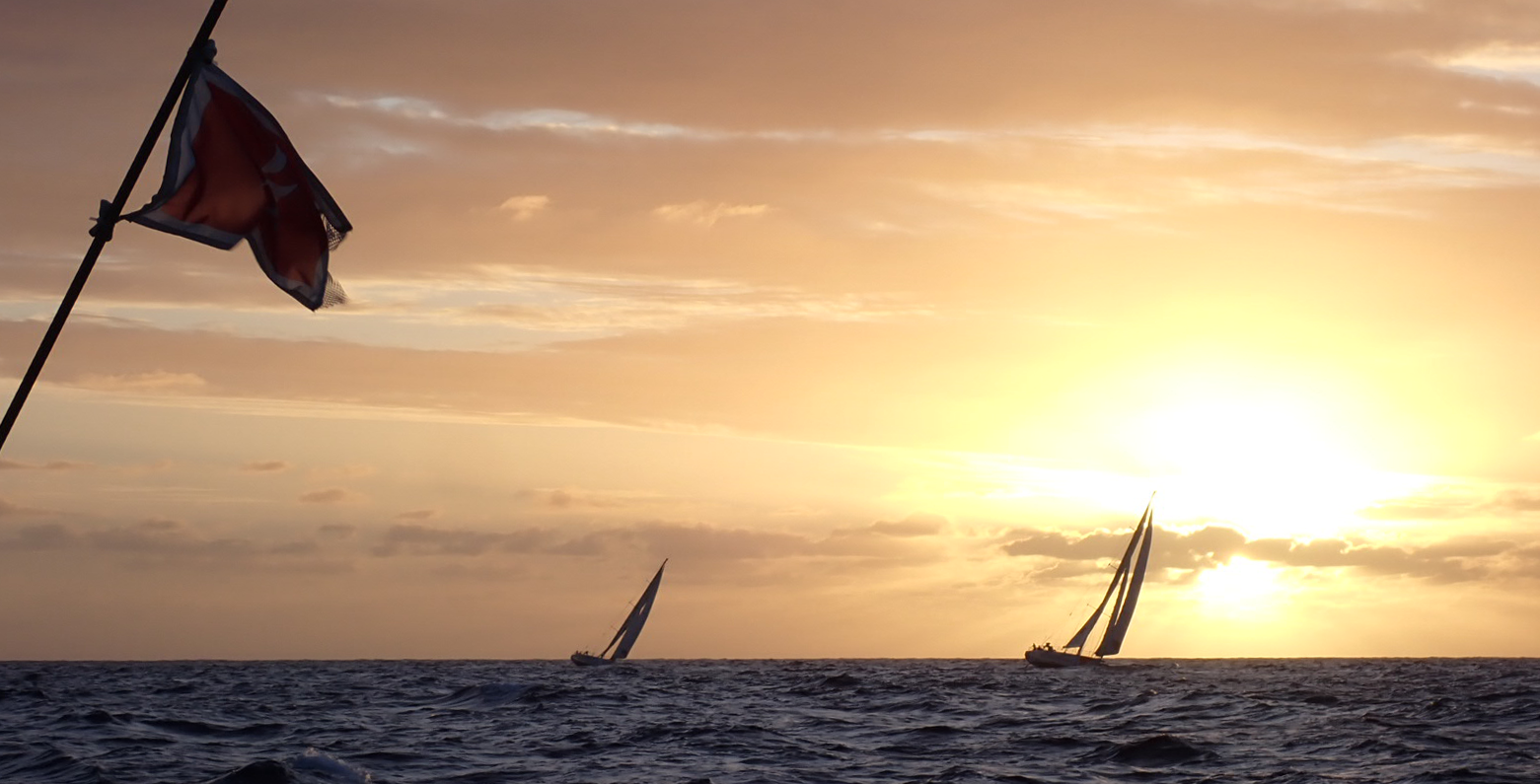
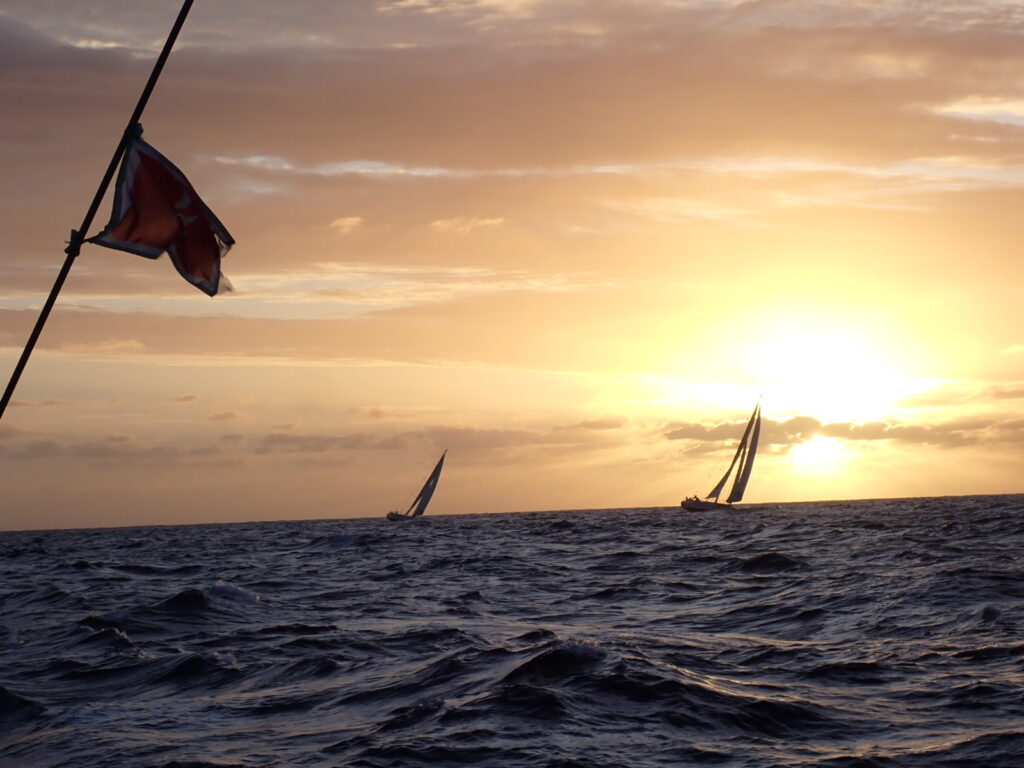
Some watches are quiet — helming to compass, trimming gently, watching stars.
Others are chaos. Sail change after sail change. Or the relentless effort of “trim, trim, trim” as we fight for tenths of a knot. Grinding winches in tropical heat. Getting called back on deck just as you fall asleep to help take down a kite.
They never advertised this as comfortable. They advertised it as endurance. That part is honest.
The Doldrums: First to Last
We entered the Doldrums corridor in first place.
The Doldrums,or technically the Intertropical Convergence Zone, is where trade winds collide and convection rules. Thunderheads build. Squalls roam. And sometimes the wind simply disappears. We found that version. We parked in a wind hole while other boats slipped around us.
For days we made almost no VMG — Velocity Made Good. VMG is the part of your speed that actually moves you toward the finish line. You might be sailing seven knots, but if you’re pointed wrong, your VMG might be two. Or zero. At one point ours was minus one and a half knots, so backwards.
We were making almost zero. One by one, boats slid past. We exited the Doldrums in last place. From first to last in a handful of sticky, demoralizing days.
The Gamble North
We had a decision to make. Follow the fleet northwest — or gamble north with one other boat. We chose north.
At first, it didn’t look brilliant. We trailed that boat by about seven miles. Then a squall rolled over us. Big wind. Heavy rain. Reduced visibility. Controlled chaos.
For an hour we drove hard with sometimes two of us holding onto the helm to keep the boat from rounding up. When it cleared, we were three miles ahead. We never trailed them again and eventually we clawed past three more boats and finished sixth.
Not what we wanted but not what we feared either.
The Ocean Sprint
During the Ocean Sprint — a timed stretch where boats compete purely on speed — we took second place.
On our boat, every crew member rotated through the helm during the sprint window. Other boats see the professional skipper and mate at the helm for this crucial time, or only the best helmsmen take the wheel. On CV21 we have no specialists for this kind of thing, for us it’s a team effort and that second place was a true crew result.
In a leg that stripped us down, that mattered.
The Hardest Part Isn’t the Sailing
Living with the diversity of people onboard remains the biggest challenge.
I absolutely adore some of my fellow crew. There are deeply genuine people here — people who give everything they have to the race and to each other. People who grind harder than required. People who check on you when you’re hurting.
I try to give everything I have.
I know what I can give is less than what others are capable of giving — there are stronger, faster, more naturally gifted sailors onboard. But I also know that what I give is more than what others sometimes choose to give. There also are those among us with a more self centered view of their relative contributions to the team. For me, even injured, even soaked, even exhausted, I tried to push.
Still, effort looks different from person to person.
One of my favorite sayings is:
“In every group of ten people there are two (jerks) and two slackers — and on any given day I might be one or the other.”
Weeks of heat, fatigue, salt, and competition compress personalities. Small things grow large. Tone matters. Attitude matters. Grace becomes harder to find. The boat magnifies whatever you bring onboard and you don’t get to step away from it.
Drenched
We wear foul weather gear because we expect to get wet but this leg, but I felt singled out by King Neptune himself. Five times I was completely drenched while in the relative safety of being below decks.
The worst was in my bunk. The porthole above me was open for airflow and a rogue wave filled the cockpit. Gallons of water poured below and onto me as I slept. My Gore-Tex sleeping bag became a reservoir. I was lying in what felt like a kiddie pool.
Other times it happened just after I’d changed into dry clothes. Salt water would find its way through a hatch in and somehow hit only me. It was funny to my team, and in truth I can’t fault them for the laughter.
Heat. Sweat. Salt. No relief. There is no reset button at sea. You just keep going.
The Question
None of this is a surprise. This is the race. This is what I signed up for. Which is why the question feels heavier.
The brutal heat. The fall in the galley. The constant dampness. The mental grind of clawing back from last. Even my five black merino wool shirts seem to have surrendered to the salt and sweat of it.
I’ve sailed more than 20,000 nautical miles in this race and for the first time, I am asking whether I want to keep going. Not because of standings or fear. Not because I can’t keep going, but because this leg was brutal in a way that seeps into your bones. I also carry a steady awareness of the cost this time away from the people I love the most is exacting on all of us.
I knew coming into this stretch — Australia to the Philippines — that it would be one of the hardest parts of the circumnavigation. The heat. The Doldrums. The unpredictability. I expected it to grind.
And yet, if I’m honest, I believe the longest and most brutal leg may still lie ahead — the stretch from Washington State down to Panama. It begins in cold Pacific water, layered in foul weather gear, bracing against systems rolling in from the north. Then, mile by mile, it turns hot as the air thickens and the breeze fades. When we slide past Mexico, the cold gives way to the same brutal, windless heat that has already tested us here. It is a leg of extremes. Which makes this moment matter. Because I know quitting now would mean walking away before the full measure of the race is taken.
I have some reflecting to do before the next race start. The ocean doesn’t care about my plans. It doesn’t even care whether I show up again. I hope somewhere beneath the fatigue, beneath the doubt, there is still a stubborn part of me that wants to,but in this moment I honestly don’t know.
The question now is simple:
Where from here?