
Before I tell you about Race 1, I want to remind everyone why I’m doing this.
I’m sailing in honor of my brother-in-law Bob, who passed away from a brain tumor at just 44 years old. I’m raising funds for the Preston Robert Tisch Brain Tumor Center, where every contribution goes directly toward helping families like ours. If you’ve been following along, please consider supporting with a donation—every mile I sail carries Bob’s memory forward. Race 1 was 1,740 miles and today we start Race 2, 5,300 miles to Uruguay. So consider just a penny a mile for one of those races, or better yet, both!
Thanks for reading! Subscribe for free to receive new posts and support my work.
Race Start
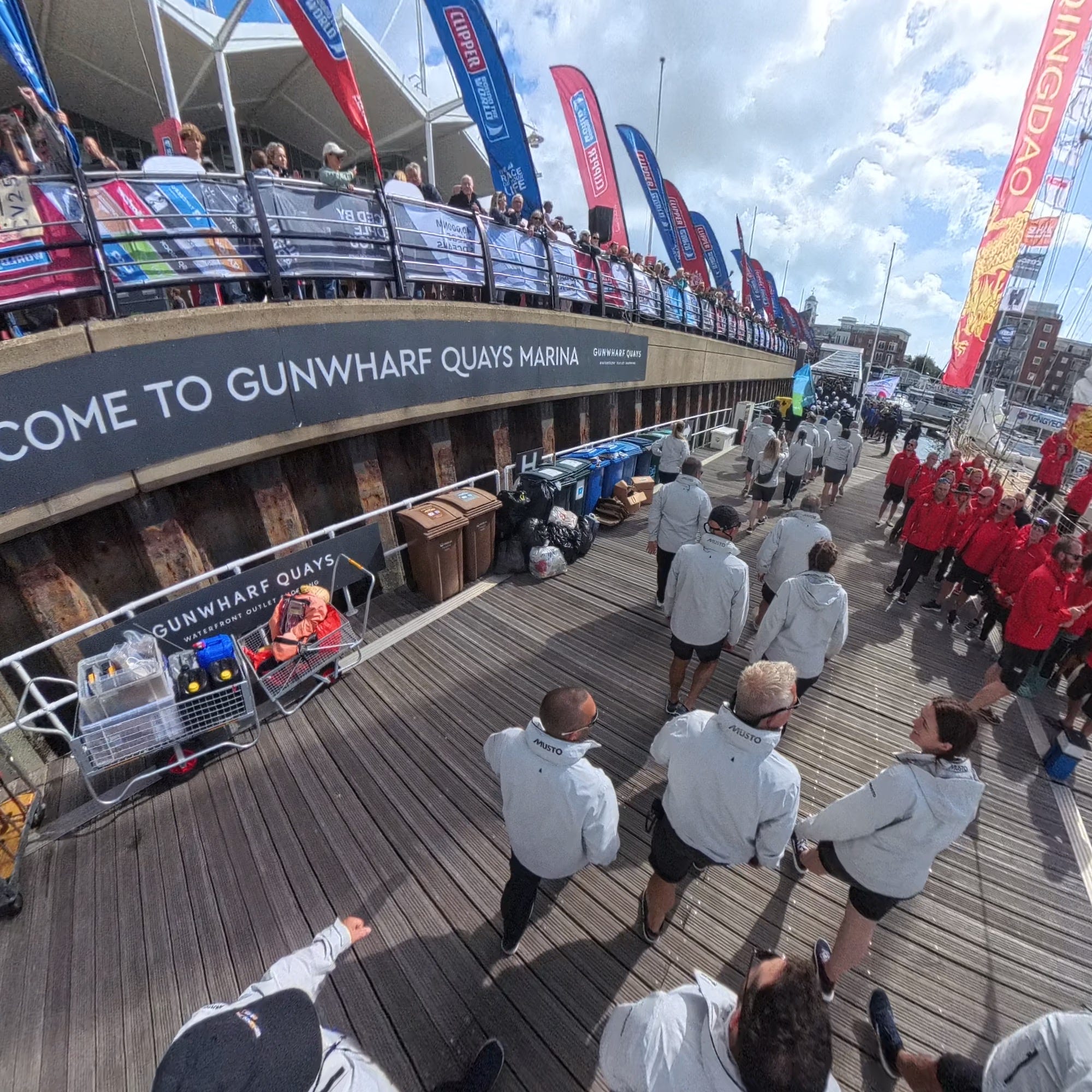
After two and a half years of training and anticipation, the day had finally come. We made our way through crowds of cheering people to be introduced on stage, then hustled back to the boat for our team photo and the Parade of Sail
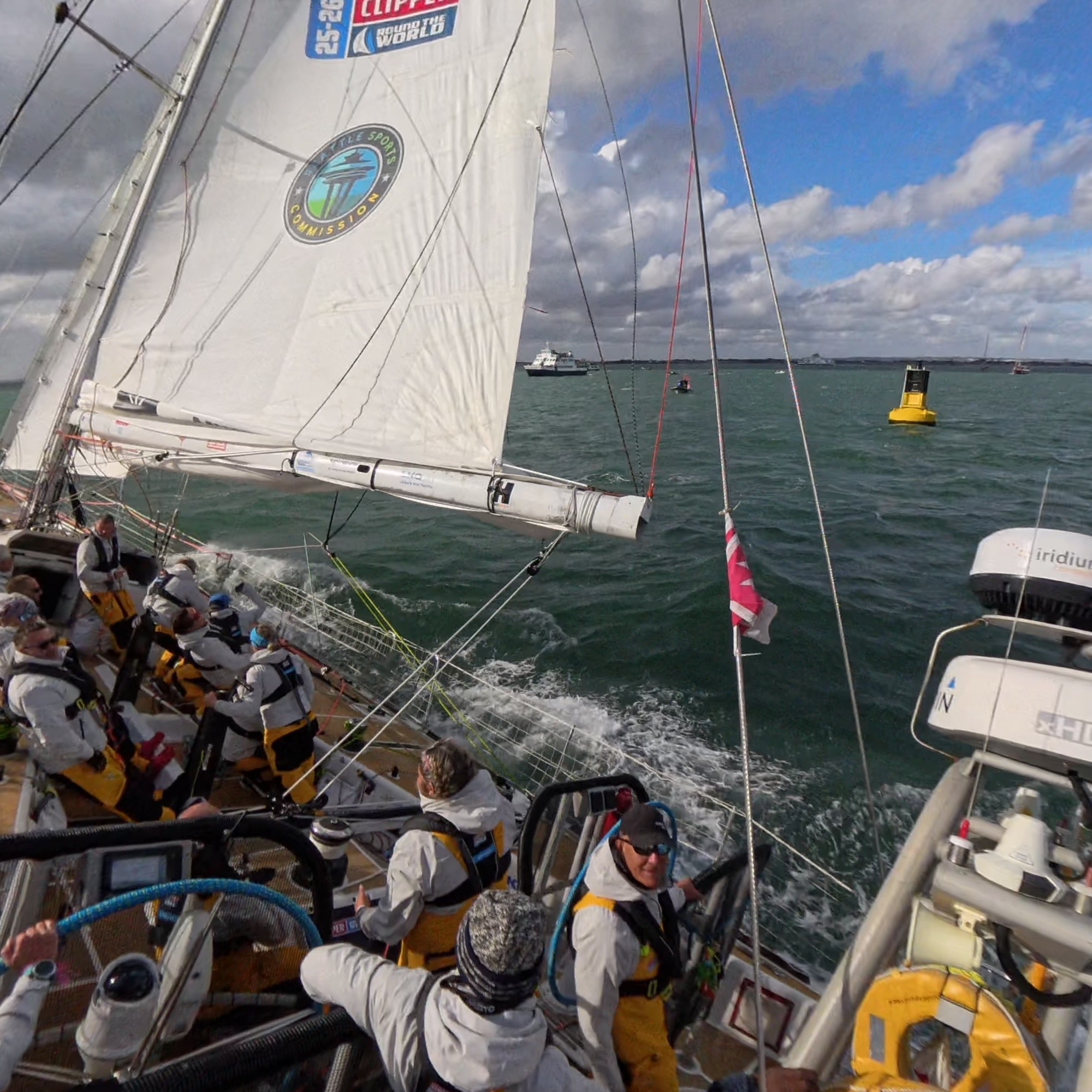
When the cannon finally fired, we slipped out into the Solent and rounded the first mark ahead of the fleet. It was exhilarating—pure adrenaline at the start of an 1,740-nautical-mile race.
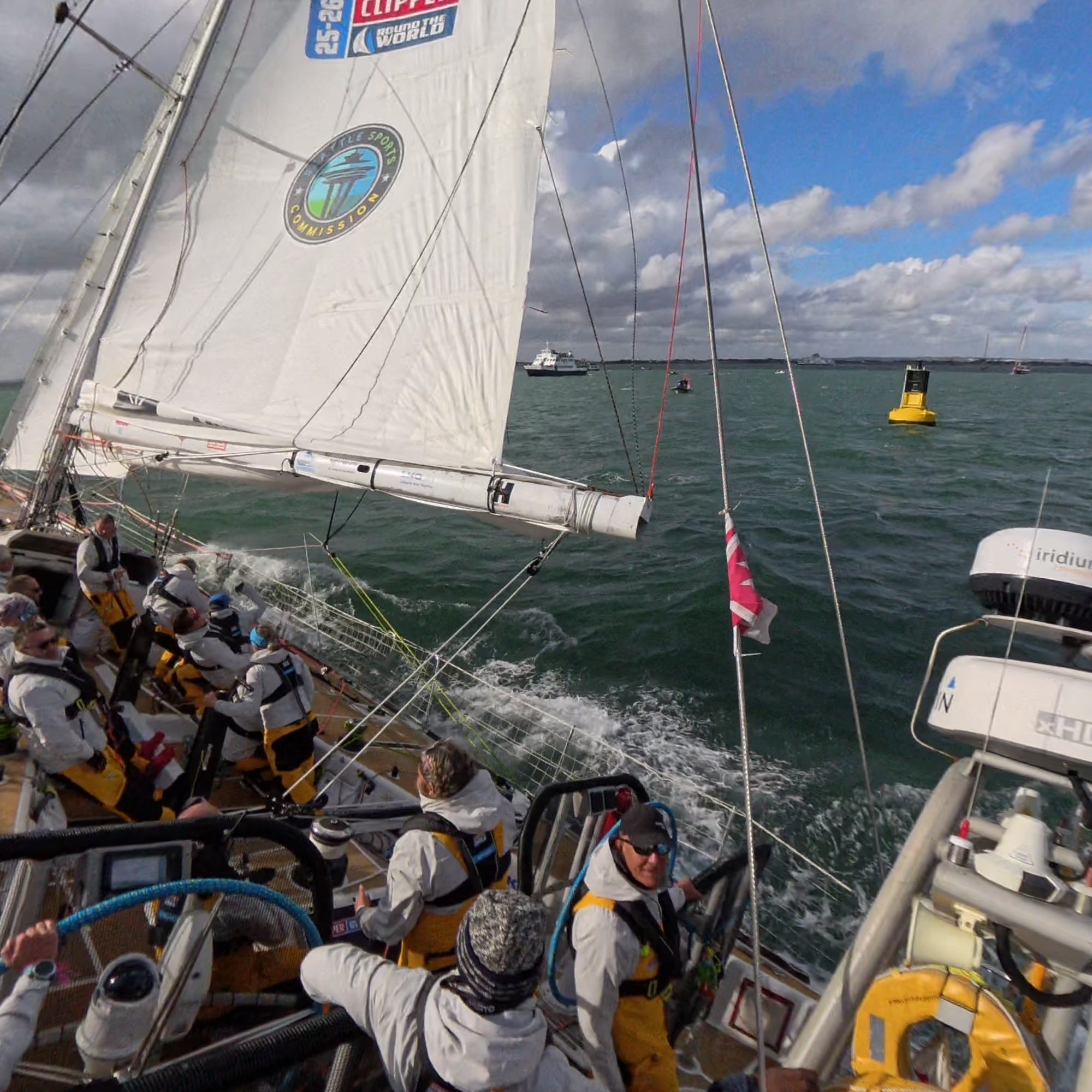
As we passed the final mark and sailed into the English Channel, a thought hit me hard: every training sail had ended with a return to Portsmouth in a few days. This time, the next time I’ll see Portsmouth again will be in 11 months, after a full circumnavigation of the globe.
The English Channel Test
The celebration was short-lived. We quickly found ourselves beating upwind into the first of three weather systems that slammed us with headwinds and chop. The boat was thrown around by cross-currents, heeling at 45 degrees and slamming into the waves, a motion which tossed everything in the boat up in the air for an instant before landing. This made everything we needed to do harder, even just lying in my bunk was a challenge.
By the end of day two, seasickness had taken its toll—over 70% of the crew, myself included, had some degree of seasickness, and many were flat in our bunks and unable to eat. It was brutal
Then, for one night, the ocean gave us a reprieve: calm sailing under moonlight, the kind of quiet beauty that reminds you why you signed up for this in the first place.
But dawn brought no mercy. The next system was stronger—winds gusting to 48 knots, seas rising over four meters, and still right on the nose. We fought our way toward the scoring gate, still pounding upwind, still heeled over.
Finding My Sea Legs
I could barely keep food down until I finally turned a corner and recovered enough to rejoin deck operations. Helming came back to me quickly, but the conditions demanded far more strength and concentration than in training. Steering a 70-foot racing yacht in 20–30 knot winds is another level entirely.
Still, I found my rhythm. At one point on the helm, I drove us to 14 knots of boat speed—a small personal victory after such a rough start.
The Finish
As we rounded the final mark and approached Puerto Sherry, the winds finally eased. We crossed the finish line in 3rd place, and with the points we earned at the scoring gate, that put our team in 2nd overall place.
It was nine days of trial by fire—1,740 nautical miles, winds topping 48 knots, and a crew that battled seasickness, exhaustion, and the elements together. And it’s only just the beginning.
Up next is the 5,300 mile journey into the Southern Hemisphere and down to Uruguay.