
Preparing the heart of the boat for the oceans ahead
“In a world of nuclear power, high-tech batteries, and engines that defy belief—we’re about to cross oceans using nothing but the wind.”
There’s something beautifully contradictory about what we’re doing.
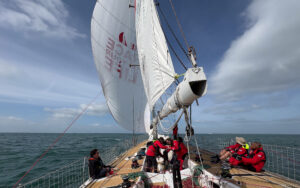
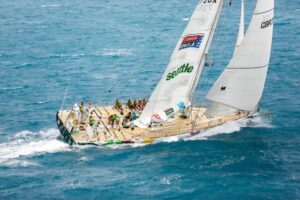
We live in a world of satellites, solar panels, and synthetic fuels. And yet—here I am in England putting the last minute touches on a 70-foot racing yacht, preparing to cross the world’s oceans just as our ancestors once did: by harnessing the wind.
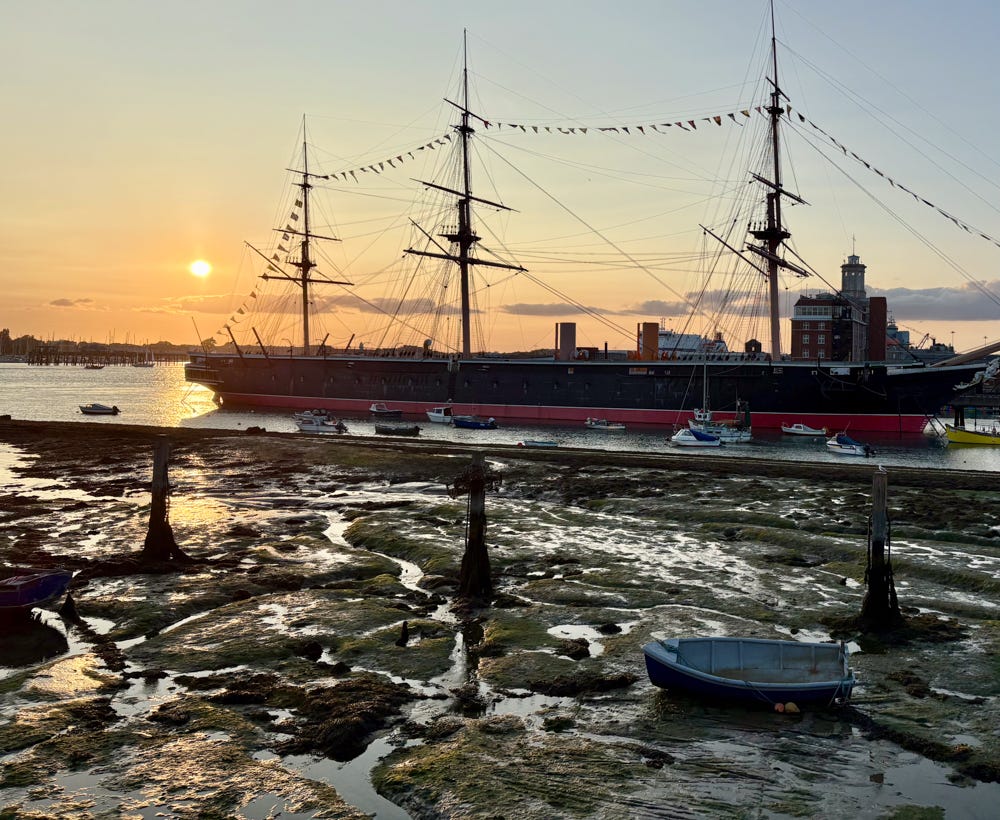
The last time I crossed the Atlantic, I did it in uniform, standing watch aboard a U.S. Navy battleship. That ship was driven by a 212,000-horsepower steam and turbine power plant turning four massive propellers—a floating fortress with more steel in her anchor than most modern ships have in their entire hulls.
And now? It is just a couple of weeks before I start to cross the Atlantic again. But this time, I’ll be propelled by cloth and rope. By the invisible hand of the wind pulling at carefully cut sails—some the size of small buildings—trimmed by hand and hoisted by muscle.
This isn’t a throwback. It’s a reminder of what’s always worked. No matter how sophisticated the world around us becomes, the Clipper Race strips things back to what is essential. Boat. Crew. Wind. And sails.
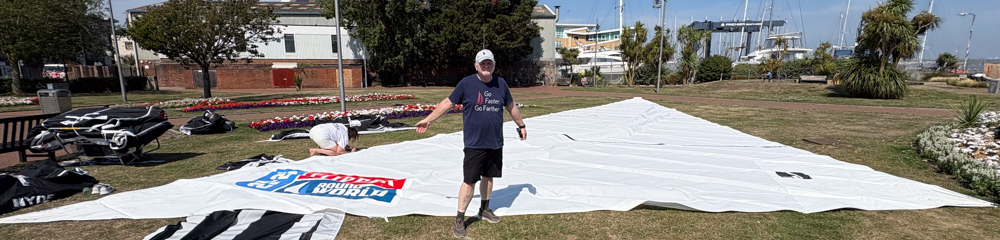
As our new sails arrive—rolled tight, clean, and full of potential. These are not just sheets of fabric; they are the very power plant of the boat. They are what turn the wind into forward motion. These sails are our driving force.
From the iconic, rugged mainsail that stays hoisted for weeks, to the silky giants known as spinnakers that billow with grace during downwind runs… from sturdy headsails like the Yankee, to the small but mighty storm jib and trisail that could one day keep us alive in a tempest—we carry a full arsenal in our sail locker. One for every wind, every wave, every mood of the sea.
They are massive. They are heavy. They are delicate. They are tough. And they demand respect.
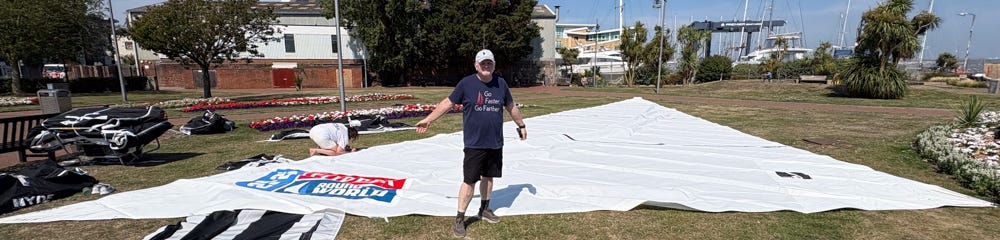
Because here’s the truth: if we take care of these sails, they’ll take care of us.
When the wind howls, when the boat is heels hard and the deck is awash in the Southern Ocean, it’s the sails that will carry us forward. And if we don’t honor them with attention, maintenance, and care, they’ll fail. And with them, so will our race.
That’s why I’m grateful to be attending sail repair training before the race. It may not sound glamorous, but learning to patch a tear or reinforce a seam could mean the difference between racing and drifting. Between finishing a leg… and falling behind. This training is a small way I can contribute to the crew’s strength. It’s how I can honor the sails.
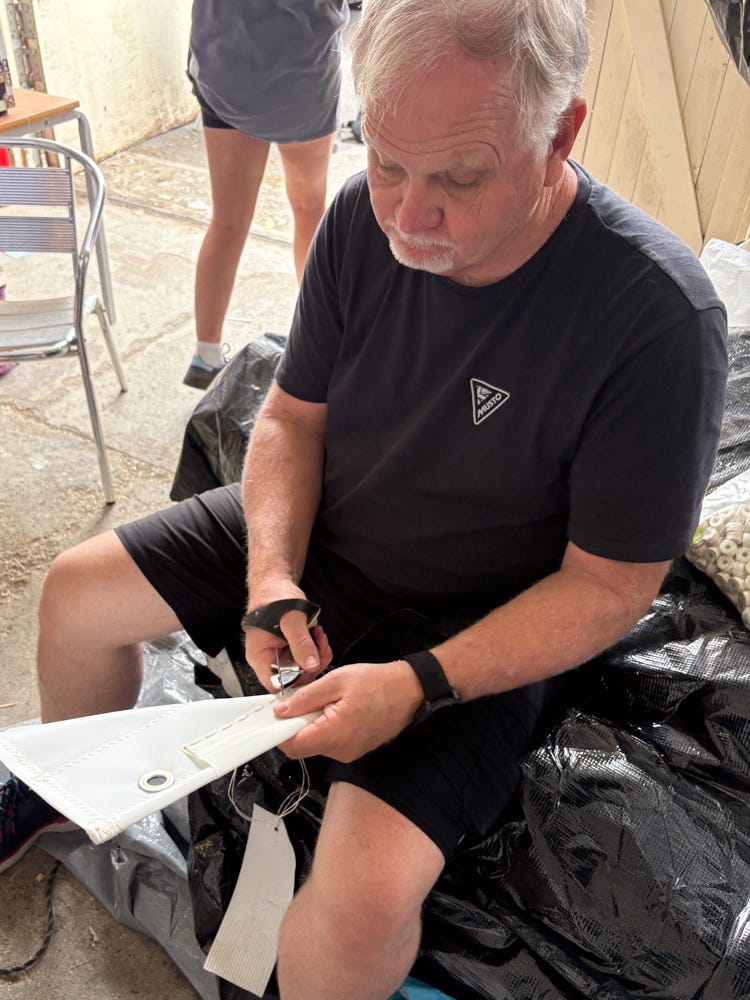
So today, as we unroll each new sail, check its lines, flake it into the sail bags, and ready it for the sea, we’re not just organizing gear. We’re preparing the soul of the boat. The part that lets us leave land behind—and reach the far side of the world.
II posted a video a few months ago on YouTube and talked about my three “whys” for doing this, cross the equator, sail as far south as the ocean allows, and complete a circumnavigation. You can listen to that video here: Once in a lifetime sailing adventure starts soon. These sails are the sails that will make that happen. They will see sunsets we can’t imagine, ride winds we haven’t yet found, and carry us to places we’ve only dreamed of.
And every time we hoist one, I’ll remember: this is how we cross oceans. Not with fuel. Not with noise. But with wind, canvas, and a deep respect for the simple things that still move us forward.
If you’re enjoying these behind-the-scenes glimpses of life aboard a Clipper Race yacht, consider subscribing or sharing this with someone who loves the sea. And remember—this journey is also a fundraiser to support brain cancer research in honor of my brother-in-law. You can learn more or donate here: tintypetim.com/go